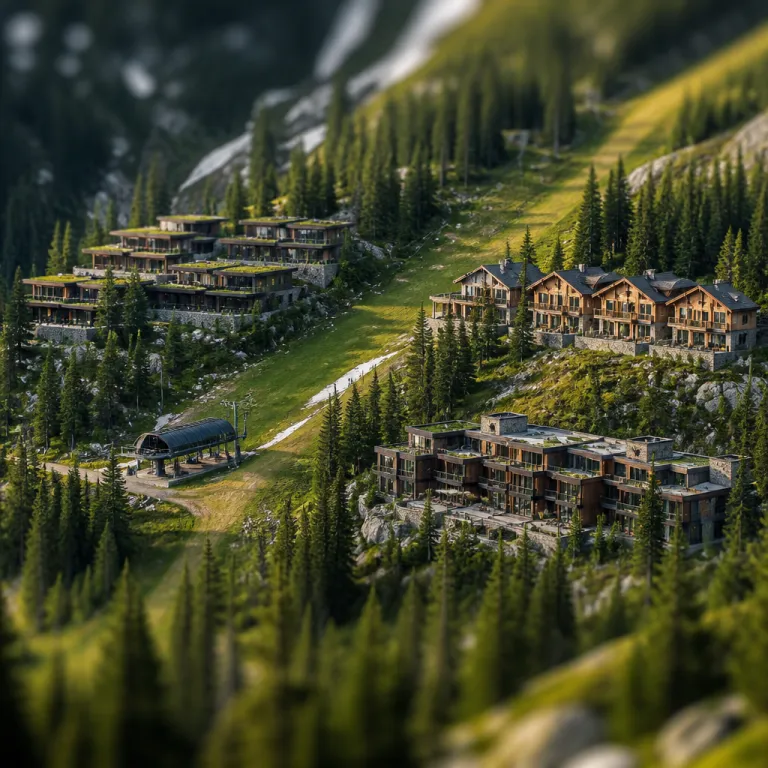
The financial engine behind branded residences ski resort investment
At the top tier of mountain hospitality, the branded residences ski resort investment model now underwrites almost every serious new project. Residence sales provide upfront capital that de risks hotel construction, allowing developers to build at ultra luxury standards that nightly rates alone could not sustain. For you as a guest, that means the ski resort you book often exists because a parallel layer of real estate quietly paid for the liftside marble and the heated ski access paths.
In practice, developers carve a residential development component out of the same resort branded masterplan, then pre sell a mix of private residences and hotel residences. Those residences generate real cash flow long before the hospitality operations open, which reduces financing costs and stabilises the overall development risk profile. The branded residential inventory is usually phased, with early sales funding core construction and later tranches supporting fit out, spa build, and the kind of ski access engineering that keeps you gliding back to the hotel rather than walking through a car park.
For investors, a branded residence in a prime ski resort is not just a second home but a hybrid between luxury homes and income producing real estate. The brand attaches its name to the residences and to the hotel branded amenities, then runs a rental programme that can offset ownership costs. As a result, the same brand that shapes your guest experience in the hotel also underpins the investment thesis for the residences, from Park City to the steepest corners of the Alps.
From Courchevel to Niseko: how residence sales fund ultra luxury mountain builds
Look at the new wave of Alpine and Japanese ski projects and the pattern becomes clear. One&Only Courchevel Private Homes, announced as one of the rarest ownership opportunities in Courchevel, is a textbook branded residences ski resort investment play, pairing a flagship hotel with a tight collection of luxury branded homes. Residence sales there are expected to shoulder a significant share of construction costs, making the overall resort viable at a level of finish that pure hospitality revenues would struggle to justify.
The same logic applies at Kindred Resort in Keystone, where 95 luxury residences sit alongside 107 hotel rooms in a single integrated development. Here, the residential development component is not an afterthought but the financial spine of the project, with sales proceeds recycling directly into ski infrastructure, spa facilities, and the kind of ski access that keeps the property competitive in a crowded market. When you see a new hotel branded opening with extensive wellness, kids’ clubs, and a serious après ski deck, you are usually looking at a balance sheet supported by early residence buyers.
Aman Niseko, anticipated to include a branded residence element, follows the same global strategy that has made Aman’s private residences a core part of its expansion. Four Seasons is expected to bring a residence component to The Park Gstaad, again using branded residences to justify ultra luxury positioning in a valley where land and construction costs are unforgiving. If you want a deeper dive into how density and pricing are shifting at the very top end, the analysis of Courchevel’s new ultra luxury threshold shows how residence led development is reshaping entire neighbourhoods.
Who buys branded ski residences, and what they expect in return
The typical buyer of a branded residence in a ski resort is not a speculative flipper but a globally mobile family treating the mountains as a long term lifestyle base. Many already own city apartments in financial hubs and are now reallocating capital into resort branded real estate that doubles as both a winter playground and a wealth preservation tool. They want ski access that works for three generations, hospitality standards that match their favourite urban hotel, and a rental programme that keeps the asset productive when they are back in the city.
In North American destinations such as Park City and Deer Valley, the branded residences ski resort investment profile often includes entrepreneurs and executives who split time between the valley and coastal cities. They look for private residences with lock off bedrooms, strong rental demand, and a brand whose global marketing machine supports long term sales performance. In European resorts, the buyer mix leans more toward multi jurisdiction families who already hold several luxury homes and now want a ski resort base with consistent service, from valet ski storage to in residence dining.
Across both continents, expectations are converging around three pillars that define a credible branded residential offer. First, the brand must deliver hotel level hospitality inside the residences, from housekeeping to concierge, without diluting the experience for hotel guests. Second, the real estate structure must be transparent, with clear usage rights, realistic rental yield projections, and governance that protects both hotel residences and standalone branded units. Third, buyers want evidence that the market fundamentals support long term value, which is why data driven pieces such as the analysis of the price gap between Courchevel and the Dolomites are now part of serious due diligence.
How Aman, One&Only, Four Seasons, and Ritz Carlton structure the mountain play
Not all branded residences in ski destinations are created equal, and the differences matter whether you are booking a suite or buying a deed. Aman tends to favour low density private residences with a strong sense of standalone branded identity, where each home feels like a discreet sanctuary plugged into a minimalist hotel. One&Only leans into resort branded theatre, with homes and hotel residences wrapped around a central social spine that keeps owners close to the après ski energy.
Four Seasons has refined a model where branded residences sit alongside a full service hotel, sharing amenities yet retaining a clear residential development governance structure. At The Park Gstaad Four Seasons, the expected residence component will likely mirror other Four Seasons mountain projects, where owners access the same spa, ski concierge, and dining as hotel guests but operate under a distinct real estate regime. Ritz Carlton, particularly through its Residences and Reserve concepts, often positions branded residential inventory as ultra luxury homes with strong rental programmes, appealing to buyers who want both yield and a familiar hospitality brand.
Legacy names such as St. Regis and Waldorf Astoria add another layer to the branded residences ski resort investment landscape. In places like Deer Valley and Park City, St. Regis branded residence schemes and Waldorf Astoria hotel branded projects have shown how residences sales can anchor a valley wide repositioning toward higher nightly rates. When you see marketing for Seasons Private Residences or Residences Regis style developments, you are looking at the same playbook : use the brand to lift both hospitality and real estate values, then let that halo effect support future sales across the market.
When the market cools: risks, guest experience, and what to watch
No investment story is one way, and branded residences in ski resorts carry their own set of risks. If property values soften or a brand loses relevance, the perceived security of a branded residence can erode faster than a generic chalet, because the premium is tied to both the bricks and the logo. In a thinner market, resale liquidity for highly specified luxury branded homes can tighten, especially in resorts with heavy construction pipelines and limited year round demand.
There is also the guest side of the equation, which matters if you are simply booking a room rather than buying into the real estate. A resort with too many private residences can feel more gated community than high energy hotel, with owners dominating prime spaces and the hospitality team juggling conflicting priorities. On the other hand, when the mix is calibrated, residence owners effectively subsidise a richer amenity set for transient guests, from larger spas to better staffed ski rooms and more ambitious dining.
For travellers, the practical question is how the branded residences ski resort investment model shapes the stay you will actually experience. Look at the ratio of residences to hotel keys, the clarity of ski access for both groups, and whether the hospitality team feels focused on service rather than sales. If you want a deeper sense of how technology and service intersect in these environments, the analysis of the digital concierge versus the human one shows how high touch hospitality remains the real differentiator, even in the most investment driven developments.
How to read a branded residence ski prospectus when you are just booking a room
Even if you never plan to buy, understanding the branded residences ski resort investment structure behind a property helps you choose where to stay. A project with a balanced mix of hotel residences and traditional keys usually signals a hospitality first mindset, where the hotel brand is not overshadowed by real estate sales. By contrast, a development that feels like a pure residential play with a small hotel attached may prioritise owners over nightly guests once the initial sales phase is complete.
When you research a ski resort, look beyond the glossy imagery and read how the development describes its residences, its private residences, and any standalone branded chalets. Check whether the residential development is phased, how many units sit in the same building as the hotel, and whether amenities such as ski access, spa time slots, and parking are shared or segmented. The more transparent the documentation, the more likely the hospitality and real estate interests are aligned rather than in quiet tension.
Names such as Waldorf Astoria, St. Regis, and Seasons Private Residences carry weight, but the real test is how those brands translate into daily operations once the construction cranes leave the valley. A well run resort branded property will make you forget where the investment spreadsheet ends and the hospitality experience begins, whether you are in Park City, Deer Valley, or a far flung Japanese bowl. As you scroll through options on a luxury ski booking platform, treat every polished hotel branded launch as both a place to sleep and a signal of the underlying investment story that made your stay possible.
FAQ
Are branded residences in ski resorts only for property investors, or do they affect regular hotel guests too ?
Branded residences in ski resorts are primarily designed for property investors and second home buyers, but they directly shape the experience of regular hotel guests. Residence sales often fund the construction of larger spas, better ski access, and more extensive dining, which hotel guests then enjoy. The key variable is the mix of residences to hotel rooms, because an over weighted residential component can shift the atmosphere toward a private community rather than a vibrant resort.
Does a branded residence component usually improve or dilute the ski hotel experience ?
A well balanced branded residence component tends to improve the ski hotel experience by subsidising higher quality amenities and more generous staffing. When owners and hotel guests share facilities under clear rules, the result can be a livelier après ski scene and better maintained infrastructure. Problems arise when private residences dominate prime spaces or when the hospitality team is pulled into ongoing sales and owner relations at the expense of transient guests.
What should I look for on a booking site to understand if a ski resort has a large residence component ?
On a booking site, clues include references to private residences, branded residences, or residence style suites sharing the same address as the hotel. If the property description emphasises ownership opportunities, long stay configurations, or a residential development phase, you are likely looking at a resort with a significant real estate layer. Checking the ratio of standard rooms to multi bedroom units will also help you gauge whether the hotel or the residences drive the overall concept.
Are branded residences in places like Deer Valley and Park City a sign of long term market strength ?
The presence of branded residences in Deer Valley and Park City generally signals confidence in the long term appeal of these ski markets. Global brands commit to residential development only where they see durable demand for both hospitality and real estate, especially at ultra luxury price points. However, while brand involvement is a positive indicator, it does not eliminate market risk, particularly in periods of oversupply or broader economic slowdown.
How do Aman, One&Only, and Four Seasons differ in their approach to ski residences ?
Aman typically focuses on low density, highly private residences that feel like standalone branded retreats with discreet service. One&Only tends to integrate homes more tightly into a resort branded social hub, creating a strong sense of community around shared après ski and wellness spaces. Four Seasons usually positions its branded residences alongside a full service hotel, offering owners and guests access to the same amenities while maintaining clear governance between the hospitality and real estate sides.