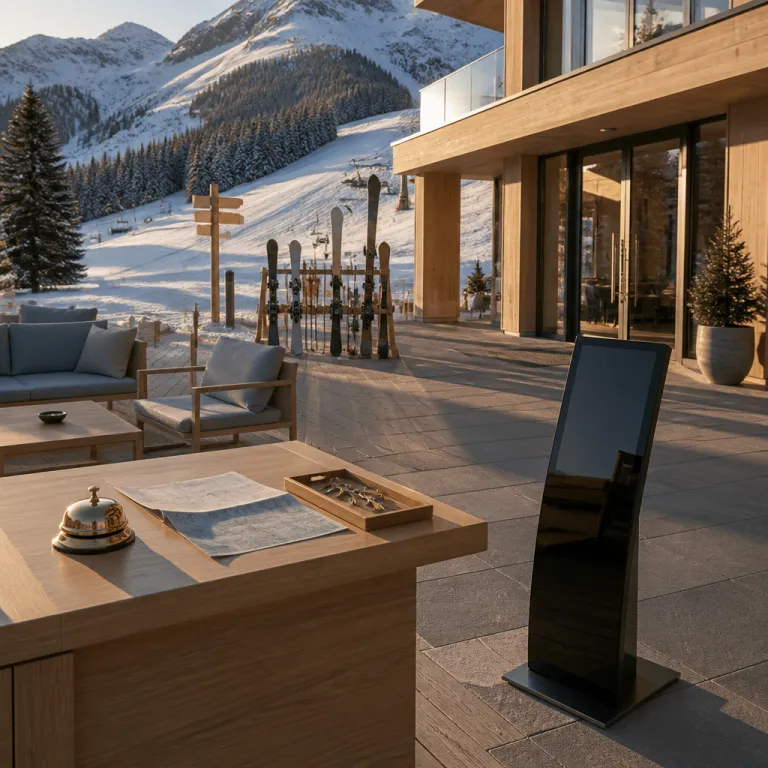
How AI concierge systems are reshaping the luxury ski stay
In the ai concierge luxury hotel ski world, the quiet revolution starts on your phone. Before you even reach the mountain, the first interaction with a luxury hotel often happens through an AI concierge that sits inside booking platforms and brand apps, shaping the early guest experience with surprising precision. For a business leisure traveler stretching a board meeting into a long ski stay, that early efficiency can decide which hotels resorts make the shortlist.
Across high altitude ski destinations, from Courchevel to the Rocky Mountains, luxury travel brands now treat AI as core infrastructure rather than a novelty. One leading resort reported that its digital concierge, nicknamed Red, handled 259,000 guest requests, with 50 % completed without human interaction, a scale no traditional front desk équipe could match in real time during peak demand. This is where AI concierge systems quietly excel ; they absorb the repetitive service inquiry load so human expertise can focus on the moments that actually feel like luxury hospitality.
Industry données back this shift in travel hospitality strategy. Surveys show that around 60 % of hotels using AI concierges report higher operational efficiency, while 75 % guest satisfaction with AI services reflects how routine tasks are now comfortably delegated to machines. For the executive traveler comparing ski hotels on specialist booking platforms, that means faster response time for airport transfers, ski pass questions, and guest room readiness updates, all before a single human concierge says welcome.
What AI concierges already do better than most front desks
On a luxury ski trip, the ai concierge luxury hotel ski promise is simple ; no friction between the runway and the first run. AI concierges are now deeply embedded in travel hospitality ecosystems, handling everything from pre arrival trip planning to late night room service orders with a consistency that human teams struggle to maintain at scale. For someone eyeing refined Alpine luxury in Cortina d’Ampezzo, an AI layer behind a curated Cortina ski resort guide can quietly orchestrate transfers, ski rental, and dining spa slots before you land.
Where these systems shine is in structured, repeatable tasks that define much of a modern ski stay. An AI concierge can confirm a guest room category, push real time weather and lift status, manage equipment rental inquiries, and secure restaurant bookings across several hotels resorts without losing track of guest preferences. For a traveler juggling meetings and powder days, the ability to adjust a three bedroom suite arrival time, book a massage, and request boot heating through one interface turns fragmented hospitality into a single coherent experience.
AI also handles volume in a way no human concierge team can match during peak ski season. When a storm hits the mountain and hundreds of guests simultaneously ask about piste openings, transfer delays, and alternative activities, automated systems maintain consistent response time while the front desk focuses on complex cases. The dataset captures this clearly ; “What services do AI concierges provide? Answer common questions, handle bookings, offer recommendations.” and “Are AI concierges available 24/7? Yes, providing round-the-clock assistance.” — a combination that makes AI an ideal first line for high demand periods.
Where digital concierges still fall short of real mountain hospitality
The ai concierge luxury hotel ski narrative sounds seductive until you hit the limits of code in a crowded lobby. A digital concierge can process a service inquiry in milliseconds, but it cannot read the tight jaw of a guest whose luggage is still in Denver while the last helicopter to the mountain has already left. In those moments, the human concierge at the front desk becomes the difference between a ruined trip and a story you will retell for years.
Complaints, complex trip planning pivots, and emotionally charged situations still belong firmly to human expertise. AI can log that a guest room is too cold or that the ski instructor arrived late, yet it cannot walk upstairs, feel the draft, and quietly upgrade you to one of the bedroom penthouses with a better aspect and thicker walls. In Grindelwald, for example, the most memorable stays often come from staff who know when to move a guest to a higher floor before the storm rolls in, a nuance that no algorithm at any elegant Grindelwald ski resort has fully mastered.
There is also the question of spontaneity, which defines true luxury in ski destinations. An AI concierge can surface personalized recommendations for dining spa options based on past bookings, but it will not notice the way you lingered over the view of a particular couloir and quietly arrange a guide for first tracks there at sunrise. Guests paying premium rates expect a level of intuitive hospitality where staff anticipate needs that were never typed into any booking platforms, and that remains the frontier where digital still trails the best mountain hotels.
The hybrid model: AI for efficiency, humans for the memorable stay
The smartest ai concierge luxury hotel ski strategies now accept that neither side wins alone. Leading luxury hotel brands in the Rocky Mountains and the Alps are building hybrid models where AI handles the predictable flow of travel while human teams curate the unpredictable magic. Four Seasons and Aman, for instance, maintain a high touch first philosophy, using automation to clear the noise so concierges can focus on the conversations that actually shape the guest experience.
In practice, this means AI quietly orchestrates the skeleton of the stay while people add the flesh. Before arrival, AI tools gather données on guest preferences from previous travel, from pillow types to preferred ski destinations and usual dining spa times, then pre configure the room and itinerary. Once on site, the front desk and concierge teams use that information as a briefing, not a script, adjusting in real time when a guest returns early from the mountain with a twisted knee or a sudden appetite for a long lunch instead of another run.
Hybrid models also respect that not every guest wants the same communication channel. Some travelers prefer to text for room service, ski tuning, or a three bedroom suite turndown, while others still want to call a familiar concierge by name and talk through trip planning in person. The most advanced hotels resorts now let the guest choose, routing simple requests through AI for speed and escalating nuanced issues to human expertise, a balance that keeps response time sharp without sacrificing the warmth that defines true luxury hospitality.
Guest preferences, data, and the new etiquette of AI on the slopes
Behind every ai concierge luxury hotel ski interface sits a growing archive of guest data, and how hotels use it now defines both trust and value. Travel trends show that high end travelers will share more information when the payoff is a visibly more personalized stay, but they are unforgiving when that data is used clumsily or without transparency. For business leisure guests in particular, the line between helpful personalization and intrusive profiling is thin.
Best in class properties treat guest preferences as a tool for subtlety, not for scripted upselling. If the system knows you usually book late afternoon spa slots after long ski days, it might quietly hold a treatment time rather than bombard you with offers, leaving the human concierge to mention it casually when you pass the front desk. When AI notes that you always request a quiet guest room away from the bar, it should adjust the allocation before arrival, not ask you again at check in, proving that the hotel respects both your time and your privacy.
There is also a new etiquette emerging around how visible the technology should be. Some luxury travel brands keep the AI layer almost invisible, presenting a single concierge identity that blends digital and human responses, while others badge their AI clearly so guests know when they are talking to a machine. For a discerning traveler choosing between ski hotels, this transparency matters ; it signals whether the property sees AI as a way to enhance hospitality or simply as a cost saving measure that replaces staff rather than empowering them.
Choosing your next ski hotel in an AI driven booking landscape
When you next scroll through an ai concierge luxury hotel ski shortlist, the smartest question is not whether a property uses AI, but how. On sites like Skiresortstay.com, where we track luxury travel trends resort by resort, the standouts are not the hotels with the flashiest apps but the ones that use technology to deepen, not dilute, the stay. A detailed feature on Courchevel’s evolving ultra luxury scene, for example, shows how top brands are using digital tools to support, rather than overshadow, the human teams that still define the village’s character ; you can read that analysis in this Courchevel luxury arms race report.
As you compare hotels resorts, look beyond the marketing language and interrogate the service architecture. Does the property offer an AI concierge that can handle routine booking and service inquiry tasks in real time, while promising direct access to a named human concierge for complex trip planning or complaints ? Are bedroom penthouses and three bedroom suites managed with the same level of personalized recommendations and proactive communication as entry level rooms, or is the technology only polished at the top tier.
Finally, pay attention to how a hotel talks about its people. A property that boasts about cutting front desk staff thanks to automation is sending a clear signal about its priorities, while one that frames AI as a way to free concierges for more meaningful guest interaction usually delivers a richer, more human stay. In a market where 76 ski area operators cite technology integration as their top investment priority, the real luxury is not the app itself but the way it quietly supports the human expertise that still turns a good ski trip into an unforgettable one.
Key statistics on AI concierges in luxury ski hospitality
- One leading mountain resort reported that its digital concierge Red handled 259,000 guest requests, with 50 % completed without human interaction, illustrating how AI can absorb routine demand during peak ski season while staff focus on complex cases (accesso survey).
- Industry research shows that 60 % of hotels using AI concierges report measurable gains in operational efficiency, confirming that automation is now a mainstream tool rather than an experimental add on in luxury hospitality (Hospitality Tech Report).
- Guest feedback data indicates that 75 % satisfaction with AI services is driven mainly by faster response time for standard requests, especially around bookings, transfers, and basic room queries (Guest Experience Survey).
- A survey of 76 ski area operators found that technology integration is the top investment priority, signalling that AI concierge tools will increasingly shape how future ski destinations manage guest flows and service delivery (accesso operator survey).
- Luxury Travel Magazine highlights personalization, flexibility, and digital innovation as defining themes in current luxury travel, aligning with the shift toward AI supported concierges that tailor stays around individual guest preferences rather than generic packages.
FAQ about AI and human concierges in luxury ski hotels
What services do AI concierges provide in ski hotels ?
In luxury ski hotels, AI concierges typically answer common questions, handle bookings, and offer recommendations for dining spa options, ski passes, and transfers. They can manage real time updates on weather, lift status, and room readiness, reducing pressure on the front desk during high demand periods. This makes them ideal for routine service inquiry tasks that do not require nuanced judgment.
Can AI concierges handle complex or sensitive guest issues ?
AI concierges remain limited when requests become emotional, ambiguous, or highly personalized. They can log complaints about a guest room or missed transfer, but they cannot negotiate compensation, read guest mood, or craft bespoke trip planning solutions that rely on human expertise and local relationships. For these situations, luxury hotel brands still rely on experienced human concierges to protect the overall guest experience.
Are AI concierges available at all hours in mountain hotels ?
Most AI concierge systems in ski destinations are designed for 24/7 availability, which is particularly valuable when guests arrive on late flights or return from après ski long after the front desk has thinned out. As the dataset notes, “Are AI concierges available 24/7? Yes, providing round-the-clock assistance.” This constant coverage ensures that basic travel needs are met at any time, even if human teams are reduced overnight.
How do guests generally perceive AI concierges versus human ones ?
Guest perception tends to split along task lines rather than technology lines. The dataset summary states, “How do guests perceive AI concierges? Generally positive for routine tasks; prefer humans for complex issues.” Travelers appreciate the speed and reliability of AI for simple bookings and information, but still value human concierges for special requests, problem solving, and the kind of intuitive gestures that define true luxury.
How can I tell if a ski hotel uses AI well rather than just cutting staff ?
A well balanced ai concierge luxury hotel ski operation will present AI as a complement to, not a replacement for, its people. Look for signs that the property still invests in a visible concierge team, offers direct contact with named staff, and uses AI mainly for efficiency in repetitive tasks. If reviews mention both fast digital responses and memorable human interactions, you are likely looking at a hotel that has found the right hybrid model.