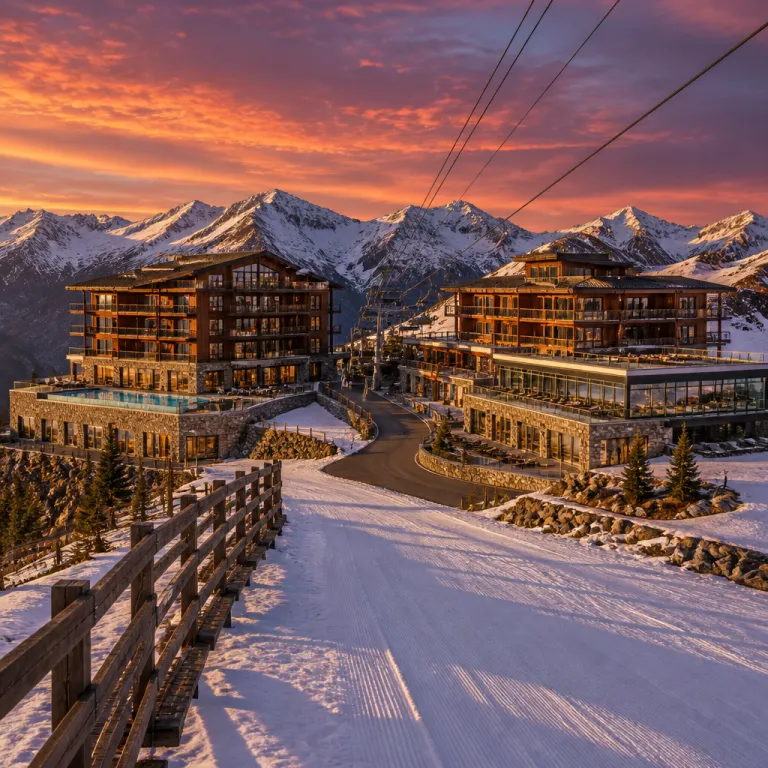
Four star vs five star ski hotel value on today’s mountain
On the modern mountain, the value gap between four star and five star ski hotels is no longer a simple ladder of price and prestige. Economic pressure has pushed many luxury hotels to trim costs while ambitious four star properties have quietly invested in better rooms, sharper ski services and more thoughtful wellness spaces. For a premium family planning a ski resort holiday in the United States or in Europe, the question is less about how many stars a hotel or resort has and more about how each property converts every dollar into real on snow experience.
Owners of luxury hotels and four star hotels have reacted differently to rising operating costs, and that divergence explains much of the new pricing equation. Five star properties, including global names such as Four Seasons, Ritz Carlton and Waldorf Astoria, have often protected headline rates by reducing staff numbers, simplifying amenities or narrowing the scope of included services. STR’s U.S. Hotel Industry Overview 2023 notes that luxury ski hotels in North America lifted average daily rate by high single digits between the 2018/19 and 2022/23 winters while occupancy stayed broadly flat, a pattern consistent with cost control behind the scenes. At the same time, many four star ski hotels and independent inns have used new investment in mountain real estate to renovate rooms, upgrade ski storage, add a compact fitness center and refine their fine dining concepts, closing the quality gap that once felt unbridgeable.
For families comparing hotels and resorts online, the smartest move is to treat the star rating as a starting filter rather than a verdict. Research hotel reviews, compare amenities, consider value for money, then look closely at photos of the view, the ski access and the layout of family friendly rooms. When you read that “Luxury hotels cutting costs, Four-star hotels enhancing services, Travelers seeking value” and that “Five-star hotel revenue increase” has coincided with an “Economy hotel revenue decline”, you are seeing the same market forces that now shape the real world trade off between four and five star ski stays on every major mountain.
Where four star ski hotels now match five star standards
The most striking shift in perceived value is inside the guest room, where many four star hotels now offer the same square meterage, bedding quality and mountain view once reserved for the top tier. New build properties in Colorado, for example, have adopted design cues from luxury ski brands, with generous mudrooms, heated floors and smart storage that make a week in a ski resort with children feel genuinely effortless. In Vail and Breckenridge, recent openings have launched with room sizes within 5–10 percent of neighboring luxury hotels but at nightly rates that are often 20–30 percent lower outside peak holiday weeks. When you read detailed reviews, you will often see guests rating four star rooms as excellent while questioning whether the extra star at a neighboring luxury hotel really adds comfort that a premium family can feel.
Dining tells a similar story, as four star ski hotels have moved beyond generic buffets into chef led restaurants that flirt with fine dining while keeping a relaxed, family friendly tone. In several mountain towns across the United States, four star properties now feature wine lists curated by serious sommeliers, kids menus that respect ingredients and breakfast spreads that would not embarrass a Relais Chateaux address. A Colorado based hotel GM, speaking at a 2023 Colorado Hotel & Lodging Association roundtable, recently summed it up: “Our guests will forgive a smaller lobby, but they will not forgive weak coffee or a boring dinner after a big ski day.” This is where the value comparison becomes tangible, because you can enjoy ambitious cuisine and attentive service without paying the full five star premium every night of your stay.
On the practical ski side, four star resorts increasingly match five star hotels with heated boot rooms, on site rental partners and ski concierges who can arrange lessons, guides and lift passes by email before you arrive. Some even share slopeside infrastructure with neighboring luxury hotels, meaning the same gondola, the same best ski terrain and the same ski resort shuttle serve both categories. When you study ultra prime rate patterns in destinations where pricing has sometimes outrun the product, resources such as the analysis of rate cards and ultra prime pricing show clearly how the balance between four and five star ski accommodation can now tilt in favor of the supposedly lower tier.
Where five star mountain hotels still justify the premium
Despite the narrowing gap, five star hotels retain advantages that matter to certain travelers, especially those who value discretion and highly personalized service over pure price efficiency. The most obvious difference is staff ratio, because a true luxury hotel maintains enough people on the floor to anticipate needs rather than simply respond to requests. In practice, that means a ski valet who remembers your boot size, a concierge who knows which bowl to keep for your powder day and a housekeeping équipe that can reset a family suite while you are still at breakfast.
Global luxury hotels such as Four Seasons, Ritz Carlton, Waldorf Astoria, Auberge Resorts and Relais Chateaux members also bring a layer of brand assurance that some families find comforting when booking a ski resort far from home. Their concierge teams can secure scarce restaurant tables in town, arrange private ski instructors, coordinate childcare and even manage medical or travel disruptions with a level of authority that smaller hotels cannot always match. In ultra exclusive ski resorts such as St. Moritz or Courchevel, that network effect can be worth the premium, because the right phone call from the right brand still opens doors.
Privacy and space are the other domains where five star resorts tend to win, especially at the top end of the market where chalets, residences and private floors create a buffer from the bustle of the main hotel. In destinations like Jackson Hole or the more rarefied corners of Switzerland, which we explore in depth in our guide to luxury booking insights for Swiss ski resorts, the most exclusive properties control not just the building but the surrounding slopes, forest and access roads. For some families, that sense of seclusion, combined with a consistently excellent location, still tips the four star versus five star decision firmly toward the top tier.
Destination by destination: where the gap is widest and narrowest
Not every country or ski town has seen the same compression in perceived value, and understanding these regional nuances is essential for families planning a trip. In the classic European luxury ski resorts of St. Moritz, Gstaad or Courchevel, the five star layer still commands a clear lead in terms of heritage, private clubs and ultra discreet service, while many four star hotels remain more traditional in design and less ambitious in wellness. Here, the gap between a grand palace style hotel and a mid market inn or casino resort can still feel as wide as the valley itself.
Contrast that with much of Colorado, Utah or the Hakuba Valley in Japan, where new investment in mountain real estate has flowed into both four star and five star properties, but where the former have often been quicker to innovate. In these regions, four star ski hotels frequently offer ski in ski out access, a well equipped fitness center, contemporary design and family friendly room categories that rival those of luxury hotels at a lower nightly rate. A 2023 snapshot of winter pricing in one Colorado resort, based on publicly available rate calendars for Presidents’ Day weekend, showed a renovated four star slopeside hotel averaging around US$650 per night, compared with roughly US$1,050 at a nearby branded luxury property sharing the same lift system. The result is a landscape in which the measurable differences are smaller, and the decision comes down to how much you prize brand cachet over square meters and slope access.
Jackson Hole is a useful case study, because it hosts everything from global luxury hotels to independent inns and emerging lifestyle resorts. A family might compare a five star property under a major flag with a new four star resort that shares the same lift system, offers similar special offers and delivers an equally strong view of the Tetons from its best ski facing rooms. In such markets, the smart move is to use a precise hotels filter, read recent reviews with an eye for service consistency and then weigh the relative merits of each option not in abstract terms but in how they support the way your family actually skis, eats and relaxes.
How premium families should calculate real mountain value
For a premium family, the most honest way to approach the four star versus five star choice is to start with your daily rhythm on the mountain rather than with the hotel brochure. Children tend to neutralise many of the subtler luxury advantages, because you will spend more time on the slopes, in the pool or exploring town than lingering over multi course fine dining or extended spa rituals. When you map your likely day, from first lift to bedtime stories, you may find that a well located four star ski resort with strong family friendly credentials delivers more usable value than a five star property whose best features you will barely touch.
Think in terms of categories and assign rough weightings, such as ski access, room layout, dining flexibility, wellness, childcare and overall atmosphere, then compare how different hotels and resorts perform in each. A four star hotel that offers interconnecting rooms, a kids club, early dinner options and a compact but bright fitness center might score higher for your family than a luxury hotel whose main strengths lie in formal service and a hushed lobby. This is where the ability to filter hotels by amenities, then follow up by email with specific questions about cots, ski school shuttles or special offers, becomes more valuable than the abstract promise of another star.
Modern luxury ski travelers also care about how a property performs outside winter, and that is another area where the value equation has shifted. Resorts that invest in thoughtful summer programming, such as trail running camps or altitude training, often deliver a richer annual experience than hotels that rely solely on their winter brand halo, as explored in our feature on how ski resorts are courting summer athletes. For families who return to the same ski resorts year after year, that broader sense of place and activity can matter more than whether the logo on the key card belongs to a five star legend or a rising four star contender.
What luxury means now for the mountain traveler
The final piece in understanding today’s four star and five star ski hotel landscape is recognising how the very idea of mountain luxury has evolved. Today’s affluent traveler is less impressed by formality and more interested in personalisation, authenticity and the sense that a hotel or resort is genuinely tuned to the rhythm of the surrounding ski resorts. That shift has opened the door for four star hotels, inns and even some casino resort style properties to compete credibly with luxury hotels, provided they can deliver a coherent story of place, service and experience.
Technology plays a quiet but important role here, because operational adjustments and service enhancements allow both four star and five star hotels to maintain high standards while controlling costs. Many properties now use digital tools to streamline check in, manage guest preferences and coordinate ski services, which means that a well run four star ski resort can feel just as responsive as a grand five star address. The context is clear; economic pressures and changing consumer expectations have pushed every hotelier, from luxury hotel owners to four star hotel owners, to rethink how they deliver value without diluting the essence of a mountain stay.
For the traveler, the practical takeaway is simple yet powerful; do not let the star rating alone dictate your choice, especially when comparing options in destinations where the gap has narrowed. Use a thoughtful hotels filter, read recent reviews with attention to service, atmosphere and family friendly details, then contact your shortlist by email to clarify any special needs or to ask about current special offers. In a world where “Why are five-star hotels cutting costs? To maintain profitability amid rising expenses. How are four-star hotels improving? By enhancing services to attract more guests. What should travelers consider when booking? Compare amenities and read reviews to assess value.”, the most rewarding ski trips belong to those who look beyond the stars and focus on the snow, the slopes and the way a property supports the way they actually live in the mountains.
FAQ
How should I compare four star vs five star ski hotel value for my family ?
Start by listing what your family will actually use each day, such as ski access, room configuration, childcare, pool, fitness center and dining flexibility. Then compare specific hotels and resorts on those points rather than on abstract luxury promises, using recent reviews and direct email questions to fill any gaps. Often, a well located four star ski resort with strong family friendly services will deliver better value than a five star property whose main strengths lie in formality and brand prestige.
Where is the gap between four star and five star ski hotels currently the widest ?
The gap tends to be widest in ultra traditional European luxury ski resorts such as St. Moritz, Gstaad or Courchevel, where heritage five star hotels still dominate the best locations and private clubs. In these towns, four star properties can feel more conventional in design and less ambitious in wellness or concierge services, so the five star premium often buys real differentiation. Families seeking the most exclusive experiences, including private guides and highly discreet service, may still find that the extra star is justified in these destinations.
Where is the gap between four star and five star ski hotels the narrowest ?
The gap is often narrowest in newer or fast developing ski regions such as much of Colorado, parts of Utah and Japan’s Hakuba Valley, where recent investment has lifted standards across all tiers. Here, four star ski hotels frequently offer ski in ski out access, contemporary design, strong wellness basics and family friendly room types that rival those of luxury hotels. In such markets, four star vs five star ski hotel value often favors the four star option, especially for families who prioritise space and slope access over brand cachet.
Are big luxury brands like Four Seasons or Ritz Carlton always worth the extra cost ?
Global luxury brands such as Four Seasons, Ritz Carlton, Waldorf Astoria, Auberge Resorts and Relais Chateaux members usually excel in staff ratio, concierge reach and overall polish, which can be invaluable in complex or ultra exclusive ski resorts. However, the premium is not always justified for families who spend most of their time on the slopes and use only a fraction of the available services. The best approach is to compare specific properties, not just logos, and to weigh whether the added privacy, service depth and brand assurance meaningfully enhance your particular trip.
How can I use online tools to find the best value in ski hotels and resorts ?
Use a detailed hotels filter to narrow options by ski access, room type, wellness facilities, dining and family friendly features, then read recent reviews with a focus on service consistency and real guest photos. Once you have a shortlist of hotels and resorts, contact each property by email to ask about current special offers, ski packages and any extras for children. This combination of smart filtering, careful reading and direct communication will reveal where the true four star vs five star ski hotel value lies for your specific dates and priorities.