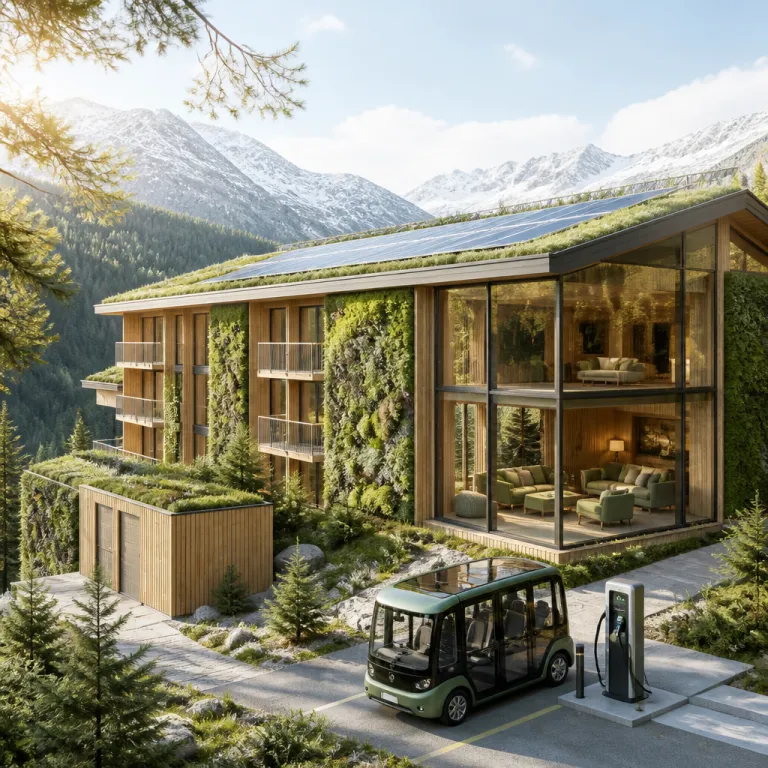
Why the all-electric mountain hotel is redefining the luxury ski stay
An all electric eco ski hotel at altitude changes what a luxury ski stay can feel like. A hotel using only electricity, often from renewable sources, for all operations shows that a high alpine ski resort can run without a single flame in the boiler room. For solo travelers planning a ski trip, this shift means your chosen resort can finally match your climate change values without asking you to compromise on comfort.
Electric Pass Lodge in Snowmass is a clear benchmark for this new generation of ski resorts. Sitting at roughly 2,000 metres, it operates as a 100 percent renewable, all electric, net zero building, with a rooftop solar array, high performance heat pumps, and access to Aspen’s wind and hydro power mix, proving that a fully electric hotel can handle serious winter without diesel backup. That altitude matters, because heating demand in a ski area is brutal, yet the lodge still delivers a polished luxury ski experience with warm interiors, strong Wi-Fi, and thoughtful food drink concepts that feel more design studio than science project.
Across the Alps, Hotel Mondschein has quietly used deep geothermal energy for years, drawing heat from far below ground through a closed-loop borehole field and high efficiency heat pumps. Its all-electric systems show how a traditional mountain hotel can pair regional timber, artisan furniture, and efficient heat pumps to cut energy use while keeping rooms genuinely cosy after a long ski holiday. When you compare these properties with older ski resorts still reliant on oil, the difference in air quality, noise levels, and even how your lungs feel after a week-long ski holidays stay becomes hard to ignore. As one engineer who works on alpine retrofits put it, “the quiet is what surprises people first, and then they realise the air just feels cleaner after a few days.”
Technical challenges at 2,000 metres: heat, storage, and the silent grid
Running an all electric eco ski hotel at 2,000 metres starts with one hard fact; heating demand is relentless. At that altitude, a ski resort can face long cold snaps where every square metre of floor, spa, and fitness space must stay warm without a gas flame to fall back on. Engineers respond with thick insulation, triple glazing, and heat recovery systems that squeeze every usable joule of energy from the building’s lungs, often targeting heat pump coefficients of performance in the 3 to 4 range even in shoulder seasons.
Battery storage is the next hurdle, because cold conditions punish lithium cells and any electric vehicle owner who has parked overnight in Whistler knows the effect. All-electric hotels lean on a mix of on-site batteries, smart controls, and grid connections to balance renewable energy from solar panels or nearby hydro with the real-time needs of guests returning from a ski trip. At Limelight Mammoth, for example, the all-electric design is paired with a high-capacity battery system sized to cover peak evening loads, so when a storm rolls in over Whistler Blackcomb or the Dolomites, the system must keep radiant floors warm, induction kitchens humming, and electric car charging bays live without a diesel generator quietly idling behind the staff parking.
For travelers comparing ski resorts in North America with the best Italian ski resort destinations, the technical story matters more than the marketing line. Properties that publish their eco rating, reference certifications such as LEED, Passive House, or national energy labels, explain their renewable energy mix, and show how they manage backup systems tend to be the ones that actually deliver lower emissions per ski holiday. If you are weighing a classic luxury ski palace against a newer all-electric property, detailed energy data such as annual kWh per guest night can be as decisive as a piste map when choosing where to base your next ski holidays adventure.
For a broader view of how sustainability is reshaping high-end Italian ski resorts, see our guide to the best destinations in Italy for luxury and premium ski experiences, then compare how many of those hotels are already shifting to all-electric systems.
The guest experience: how all-electric comfort actually feels
From a guest’s perspective, the most striking thing about an all electric eco ski hotel is often what you do not notice. There is no low rumble from a boiler room, no faint smell of combustion near the service entrance, and no clatter from oil deliveries arriving before your first ski run. Instead, you step into a quiet lobby where radiant floors, thick walls, and carefully zoned heating keep the air still and warm, not dry and over-forced.
In rooms, electric systems change the sensory palette of a ski resort stay in subtle ways. Radiant floors warm your feet after a long ski area session, while efficient ventilation keeps humidity in check without the roar of a fan unit above the window. Kitchens in these hotels rely on induction rather than gas, which means food drink service can be both precise and cleaner, with chefs working over cool-to-touch surfaces that respond instantly yet emit less waste heat into already warm back-of-house corridors.
Guests who arrive in electric cars or other electric vehicles notice the difference in infrastructure as soon as they park. Properly designed all-electric hotels offer multiple charging points, often including fast charging bays suitable for a Tesla or any modern electric vehicle, so your electric car is ready for the next ski trip without a detour to a public charger. One recent guest at a fully electric lodge described the experience simply: “I plugged in the car, hung up my jacket, and realised I had not heard a single generator all week.” For a deeper look at what genuine sustainability means beyond the press release, our analysis of what sustainable really means at a luxury ski resort breaks down which eco friendly claims hold up once you read past the brochure.
Cost, design, and why the all-electric narrative is booking power
Building an all electric eco ski hotel costs more upfront, and serious developers do not pretend otherwise. High performance envelopes, triple glazing, geothermal drilling, and large heat pumps require capital that older fossil systems never demanded. Yet once the ski resort opens, the operating costs often fall as renewable energy contracts, efficient systems, and smart controls reduce long-term exposure to volatile fuel prices and help stabilise annual energy bills.
For a solo traveler comparing luxury ski options, the question is whether that investment translates into a better stay. In practice, the same design moves that cut energy use — thicker walls, better windows, smarter ventilation — also create quieter rooms, more stable temperatures, and fewer drafts after a late ski trip back from the far side of the ski area. When you add in the narrative power of staying in one of the best eco ski properties on the mountain, the premium room rate starts to feel less like a surcharge and more like a vote for the future of ski resorts.
Booking data from high-end hotels suggests that sustainability stories now influence both where guests stay and how long they extend a ski holiday. Travelers who arrive in electric cars, follow properties on Facebook Instagram, and track eco rating scores are often the same people willing to pay for a longer holiday if the resort aligns with their climate change concerns. If you want to see how the ultra-luxury end of the market is evolving, our report on new ultra-luxury density in Courchevel 1850 shows how design, energy strategy, and status now intersect at the very top of the ski resorts pyramid.
Leaders, retrofits, and how to choose your next eco ski base
Electric Pass Lodge, Hotel Mondschein, and Limelight Mammoth illustrate three distinct paths toward the all electric eco ski hotel ideal. Electric Pass Lodge shows what happens when you design a net zero, all-electric building from the ground up at around 2,000 metres, with every system tuned for renewable energy. Hotel Mondschein demonstrates how deep geothermal can anchor a long-term transition in a traditional alpine setting, while Limelight Mammoth signals how North American ski resorts are beginning to embrace fully electric hotels in serious snow country.
Retrofitting existing hotels is harder than building new, because legacy structures were never designed for the weight of extra insulation, the space for large heat pumps, or the routing of new electric risers. Many older ski resort properties still rely on oil or gas boilers that sit at the heart of their mechanical rooms, making a full conversion to renewable energy a multi-season project rather than a quick upgrade. This is why new all-electric hotels often leap ahead in eco rating terms, while established hotels move more slowly through partial measures like LED lighting, minor envelope improvements, and limited electric vehicle charging.
As a traveler planning a ski holiday, you can still make sharp choices even in a mixed market. Ask each hotel how much of its energy comes from renewable sources, how many electric vehicles it can charge at once, and whether its long-term plan is to become a fully all electric eco ski hotel or simply a slightly more eco friendly version of the status quo. When you read that “A hotel using only electricity, often from renewable sources, for all operations” is now possible at altitude, the next step is to decide whether your own ski holidays budget will support the pioneers or keep rewarding the laggards.
FAQ
What exactly is an all-electric mountain hotel ?
An all-electric mountain hotel is a property that uses electricity for every major system, including heating, hot water, kitchens, and spa facilities. Many of these hotels source a large share of their electricity from renewable energy such as hydro, solar, or geothermal, which sharply reduces operational emissions. In practice, this means no gas boilers, no oil tanks, and no on-site combustion, even during the coldest weeks of the ski season.
Does staying in an all-electric hotel feel different for guests ?
Most guests notice quieter rooms, more stable temperatures, and cleaner air rather than any loss of comfort. Radiant floors and well insulated walls keep spaces warm without the noise of forced air systems, while induction kitchens support high quality food drink service without open flames. The main visible difference is usually the presence of multiple electric car charging points and clear sustainability information in the lobby or on the in-room tablet.
Can an all-electric hotel really handle extreme cold at 2,000 metres ?
Yes, provided the building is designed with a strong envelope, efficient heat pumps, and well planned energy storage. Properties like Electric Pass Lodge at around 2,000 metres and geothermal powered Hotel Mondschein show that all-electric systems can maintain comfort through long cold spells. The key is integrating insulation, glazing, and mechanical systems from the start, rather than trying to bolt electric solutions onto an inefficient shell.
How should I evaluate the sustainability of a ski resort hotel ?
Look for clear data on renewable energy use, building certifications, and long-term decarbonisation plans rather than vague green language. Ask whether the hotel has on-site electric vehicle charging, how it manages waste, and whether it tracks an independent eco rating or energy performance label. Comparing these answers across several hotels in the same ski area will quickly reveal which properties are serious about sustainability and which are relying on marketing.
Is it better to choose a new all-electric property or a retrofitted classic ?
New all-electric hotels usually achieve lower emissions faster, thanks to integrated design and modern systems. Retrofitted classics can still be compelling if they combine strong character, a prime ski resort location, and a credible roadmap toward full electrification over the next renovation cycles. For a solo traveler, the choice often comes down to whether you prioritise cutting-edge eco ski performance or the layered history of an older property that is steadily improving its footprint.