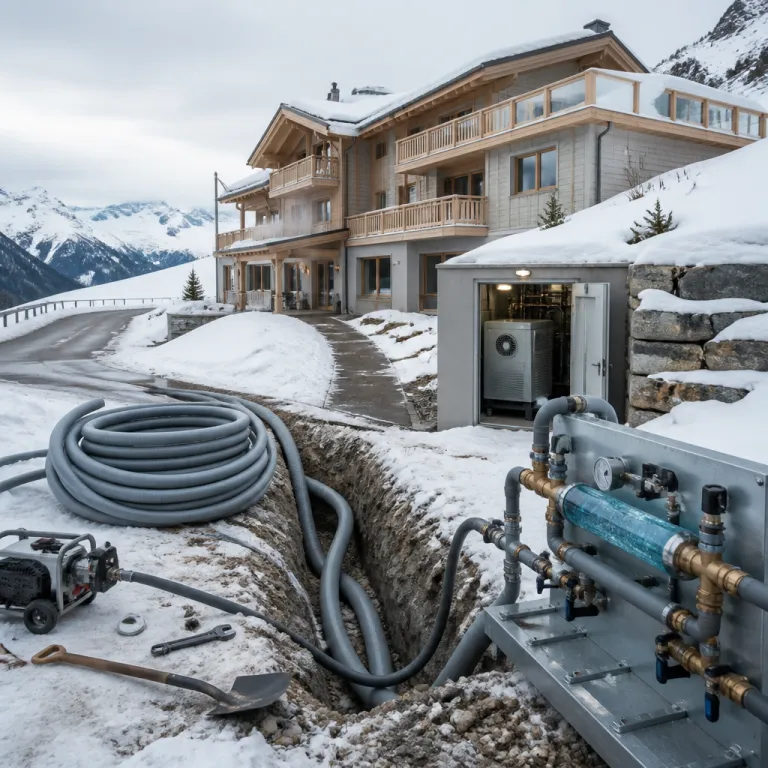
Why geothermal heating now matters more than the spa menu
In high altitude hospitality, the real luxury is no longer only the corner suite but the low carbon energy strategy behind it. For a modern geothermal heating ski resort, the balance sheet now tells as compelling a story as the wine list, because heating and hot water costs at altitude routinely run 30 to 40 percent higher than in lowland properties. When you book a five star stay in the Alps today, you are often choosing between legacy fossil fuel boilers and a new generation of geothermal energy infrastructure that quietly reshapes both pricing power and long term asset value.
Alpine hotel owners face immense pressure from rising energy prices, stricter environmental regulation and guests who expect warm stone bathrooms in the coldest winter nights. That combination has pushed many to work with geothermal technology providers and energy consultants to install ground based systems that draw stable heat from the earth instead of trucking fuel up the mountain. According to the US Environmental Protection Agency’s guidance on ground source heat pumps, using the ground as a thermal reservoir can reduce heating and cooling related energy consumption by roughly 30 to 60 percent compared with conventional systems, and that saving compounds every winter season the lifts are open.
For you as a guest, the appeal is deceptively simple, because the best systems make the renewable technology invisible while they provide consistent comfort. Under the floor, pipes circulate water or a heat transfer fluid through the ground to capture heat stored in the earth, then heat pumps concentrate that low grade source heat to warm rooms, pools and wellness facilities without the carbon plume. Above the floor, you experience a quietly cool, clean lined room that stays warm in winter and pleasantly cool in summer, while the hotel locks in more predictable energy costs and a more resilient business model.
How geothermal works at altitude and why geology decides the winners
At a geothermal heating ski resort, the engineering starts long before the first guest arrives, with drilling rigs mapping the ground beneath the piste rather than the piste map itself. Engineers study the local geology to understand how the earth layers, rock types and underground water flows will affect the efficiency of geothermal energy extraction and the stability of the heat exchange with the ground. In alpine regions with the right conditions, vertical boreholes can reach tens or even hundreds of metres into the subsurface, where temperatures remain stable through winter blizzards and summer heatwaves.
The principle is straightforward yet powerful, because the ground acts as a giant rechargeable battery that stores heat from the sun and the surrounding environment. Closed loop pipes circulate a fluid that absorbs this heat stored in the earth, then a heat pump upgrades that low grade source heat into usable heating for rooms, spas and public spaces. As the US Environmental Protection Agency notes in its technical fact sheets on ground source heat pumps, using stable underground temperatures can cut energy use for heating and cooling by around 25 to 65 percent while reducing greenhouse gas emissions and reliance on fossil fuel energy sources — a concise summary of why this technology suits cold climate hotels.
Altitude adds complexity, since drilling through fractured mountain rock and managing groundwater can increase installation cost and risk, especially for existing properties. Yet once operational, these systems provide highly efficient renewable energy that is largely shielded from volatile fuel prices and supply chain disruptions. For safety focused travelers, it is also worth noting that sealed geothermal systems reduce combustion related risks, a topic explored in depth in our guide on preventing carbon monoxide incidents at ski resorts, which shows how cleaner source heat technologies can support both environmental and guest safety goals.
New build alpine hotels: when geothermal shapes the business model from day one
The most ambitious geothermal heating ski resort projects now treat energy design as a core part of the development concept, not an afterthought bolted on after the spa layout. In Switzerland and Austria, where building codes for hospitality are tightening around environmental performance, many new alpine hotels specify ground source heat pumps and geothermal heating systems as standard, integrating them with solar panels and other renewable energy sources from the first architectural sketch. That integrated approach allows owners to size borefields, mechanical rooms and water storage precisely, so the geothermal energy system can handle both peak winter heating loads and shoulder season demands.
Capital expenditure is higher upfront, because drilling deep into the earth and installing extensive underground pipework is not cheap, especially on steep mountain ground. Yet the payback period is increasingly compelling, as operators report double digit percentage reductions in heating energy costs once the systems move from installation to operational phase and cost savings realization. Recent alpine case studies reported by Swiss and Austrian hotel associations suggest that for mid sized hotels, geothermal CAPEX can range from roughly 8 to 15 percent of total construction cost, with simple payback periods often in the 8 to 15 year range depending on local electricity tariffs, grid mix and incentives, while larger destination resorts may see even stronger lifetime returns.
From a guest perspective, the infrastructure remains mostly invisible, but it subtly shapes the stay, from the always warm stone in the spa to the stable pool temperature even when the outside air feels brutally cool. The real test of sustainability at a luxury ski property is not the press release but the engineering drawings, a point we unpack in our analysis of what sustainable really means at a luxury ski resort. When you see a hotel investing heavily in stored earth systems and energy geothermal solutions, you are usually looking at an owner planning for decades, not just the next winter season.
Retrofitting legacy properties: where romance meets the realities of rock and pipe
Many of the most atmospheric alpine hotels were built long before anyone talked about renewable energy or geothermal heating, and their charm often hides unforgiving mechanical rooms. Retrofitting these properties into a modern geothermal heating ski resort requires threading new pipework through thick stone walls, finding space for heat pump equipment and drilling boreholes around existing structures without destabilizing the ground. That complexity makes retrofits more expensive and disruptive than new builds, even when the long term energy savings and environmental benefits are just as attractive.
Owners typically phase the work between winter seasons, using shoulder periods to open courtyards, car parks or nearby land for drilling into the earth and installing the underground loops that will carry water or refrigerant. The stored earth beneath the property then becomes a long term reservoir of heat stored from the sun and surrounding environment, which the system can tap for both heating in winter and gentle cooling in summer. In practice, this means a single integrated plant can provide source heat for radiators, underfloor systems, domestic hot water and sometimes even the outdoor pool, reducing reliance on delivered fuel and cutting environmental impact.
For guests, the main visible sign of such a retrofit might be a more consistent room temperature, quieter mechanical noise and a subtle shift in the sustainability narrative on the website. Behind the scenes, the hotelier is balancing the romance of heritage architecture with the hard numbers of energy sources, maintenance costs and regulatory compliance. When you evaluate a legacy property, asking whether it has invested in geothermal energy or other deep efficiency measures can tell you as much about its future resilience as any design detail in the lobby.
The guest lens: reading between the lines of sustainability claims
For a business leisure traveler extending a trip into the mountains, the decision to book often starts with snow quality, room category and Wi Fi speed, not the kilowatt hours of geothermal energy in the basement. Yet as more alpine hotels adopt geothermal heating and other renewable energy systems, the sustainability story is shifting from soft marketing language to hard operating data that can influence both nightly rates and long term asset values. The paradox is that many guests still care more about the spa menu than the source heat technology, even as that technology quietly keeps the hammam warm through the coldest winter nights.
When you read a property description, look for specific references to ground source heat pumps, stored earth systems or integrated renewable energy sources, rather than vague mentions of being eco friendly. Hotels that explain how they use the earth and ground as a thermal battery, how much of their heating load is covered by geothermal heating and how they manage water use across pools and wellness facilities usually have a more serious environmental strategy. Our feature on how leading resorts rebuilt their summer pitch shows how the smartest operators now leverage the same energy geothermal systems to provide efficient cooling in summer, keeping rooms pleasantly cool without aggressive air conditioning.
For you, the practical benefit is comfort with a lighter footprint, as the hotel uses heat earth exchange to smooth temperature swings and reduce dependence on volatile energy sources. In winter, the system draws heat stored in the ground to provide steady heating, while in summer it can reverse to move excess heat back into the stored earth, stabilizing both the indoor climate and the long term environment around the property. Choosing a geothermal heating ski resort is no longer just a moral gesture; it is a way to align your stay with properties whose operating economics, environmental performance and guest experience all point in the same direction.
FAQ
How does geothermal heating reduce costs for alpine hotels ?
Geothermal heating reduces costs by using stable underground temperatures as a reliable source heat, which allows heat pumps to operate far more efficiently than traditional boilers. Because the ground and stored earth maintain a relatively constant temperature, the system needs less energy to move heat into the building during winter. Over time, this lower energy consumption translates into significant savings on fuel or electricity bills, especially in high altitude environments where heating demand is immense.
Is geothermal heating suitable for very cold winter ski resorts ?
Geothermal heating is particularly suitable for cold climate ski resorts, because the ground temperature several metres below the surface remains stable even when the air temperature drops sharply. By tapping into this consistent geothermal energy, hotels can provide reliable heating for rooms, public spaces and wellness facilities throughout the winter season. The key is proper system design, with enough boreholes and correctly sized heat pumps to match the property’s peak heating load.
What are the main environmental benefits of geothermal systems in hotels ?
The main environmental benefit is a substantial reduction in greenhouse gas emissions, since geothermal systems rely on renewable energy stored in the earth rather than burning fossil fuels on site. Because the system circulates water or fluid through closed loops in the ground, it also minimizes local air pollution and reduces the risk of combustion related incidents. Over the life of a hotel, this cleaner energy profile can significantly lower its overall environmental footprint while still providing high comfort levels for guests.
Can geothermal systems also provide cooling in summer ?
Many modern geothermal installations are designed as reversible systems that can provide both heating in winter and cooling in summer. In cooling mode, the system moves excess indoor heat back into the ground, using the stored earth as a heat sink rather than a heat source. This approach keeps interiors pleasantly cool without the noise and visual impact of conventional air conditioning units, which is particularly attractive for luxury properties that value discreet technology.
Why are new build alpine hotels adopting geothermal more quickly than older properties ?
New build hotels can integrate geothermal energy systems into their design from the outset, reserving space for mechanical rooms, planning borehole fields and optimizing the building envelope for efficiency. This makes installation more straightforward and often cheaper per room than retrofitting an existing structure with limited space and complex foundations. Older properties can still adopt geothermal heating, but they face higher upfront costs and more construction disruption, which slows the pace of adoption compared with new developments.