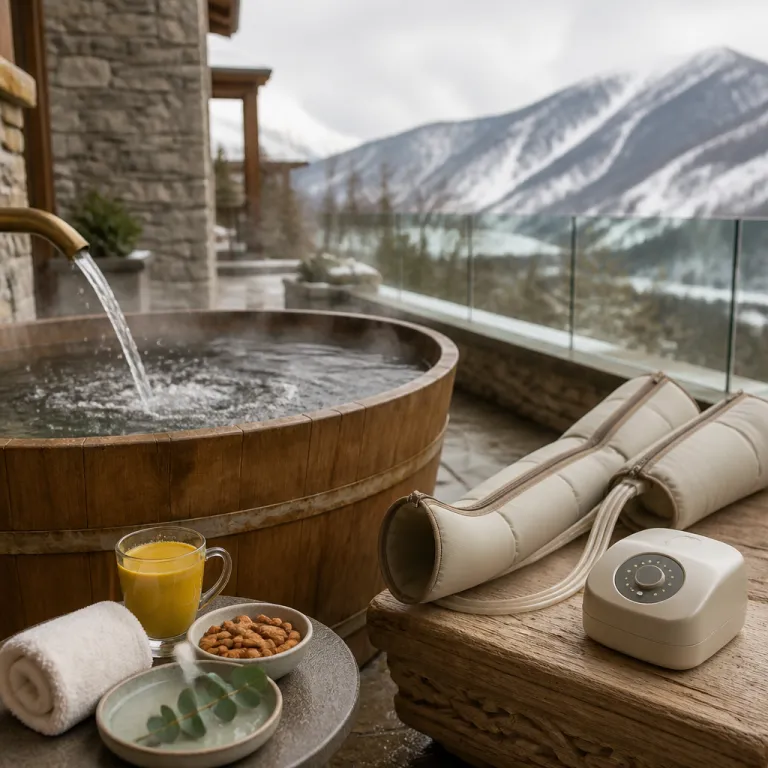
From spa day to recovery day at Four Seasons mountain resort properties
The phrase four seasons mountain resort recovery wellness now means something very specific on the ski circuit. At Vail, Whistler and Jackson Hole, a structured recovery day has quietly overtaken the casual spa day as the most requested non ski experience, reshaping how premium families plan their time off the slopes. For travellers used to traditional hotels resorts in the United States, this new format feels closer to a performance programme than a pampering interlude.
At Four Seasons Resort and Residences Vail, the Therabody Wellness Experience anchors the recovery programme, with a 60 to 80 minute block of therapeutic massage, compression boots and guided relaxation designed for tired muscles after hard snow days. Four Seasons Resort and Residences Whistler answers with its Rite of Balance experience, which folds in contrast therapy and stretching so that a recovery day becomes a deliberate treatment sequence rather than a random spa circuit. Four Seasons Resort and Residences Jackson Hole completes the triangle with its Recovery Zone and sports recovery massage, tailored to guests who have pushed themselves on the steeps above Teton Village and now want measurable health benefits, not just scented candles.
Across these properties, the four seasons mountain resort recovery wellness concept is built around clear objectives that every therapist can articulate. The aim is to alleviate muscle fatigue, enhance circulation and promote overall wellness, using technology led tools as confidently as hands on techniques. That clarity of purpose is why a recovery day now justifies skipping skiing Jackson for an entire day, especially for families who see it as an investment in the rest of their week rather than a guilty pleasure.
Inside a structured recovery day: schedule, treatments and cost
A typical four seasons mountain resort recovery wellness day starts slowly, not with a mad dash to the first lift. Guests usually book a late morning slot for the core treatment programme, giving the body time to wake up and hydrate properly after altitude and travel. The resorts strongly recommend guests book in advance, wear comfortable clothing and drink water before and after, which already sets a different tone from a last minute spa booking squeezed between runs.
At Vail, the Therabody Wellness Experience runs around seventy minutes on average, combining therapeutic massage, Therabody devices, Hyperice compression boots and a quiet relaxation period in a dedicated room. Whistler’s Rite of Balance layers in guided breathing and contrast therapy, so the treatment feels like a mini retreat within the larger mountain resort stay, especially when paired with a light, nutrition conscious lunch. Jackson Hole’s Recovery Zone focuses more on sports recovery massage and targeted tools for skiers coming off the steeper hole mountain terrain above the resort, where aggressive laps can leave even strong legs shaking by midweek.
Pricing varies by seasons resort and by duration, but you can expect a premium aligned with top tier spa treatment costs in leading hotels resorts across the United States. Families often turn the day into a shared experience, booking adjacent time blocks so parents and older children rotate through the programme while younger ones use the pool or supervised facilities service. For travellers interested in more advanced cold exposure, the recovery day can be paired with contrast therapy options such as plunge pools and cryotherapy, which we analyse in depth in our guide to cold therapy at altitude.
Why structured recovery outperforms à la carte spa bookings
The key shift with four seasons mountain resort recovery wellness is structure ; this is not a random pick and mix of treatments. A defined sequence of massage, devices and guided relaxation is designed to accelerate muscle recovery and reduce soreness in a way that scattered spa appointments rarely achieve. The resorts have leaned into data from partners such as Therabody and Hyperice, aligning their methods with sports science rather than relying solely on intuition.
From an outcomes perspective, a programmed recovery day behaves more like a mini health retreat than a spa afternoon, especially when repeated across a multi day stay. Four Seasons reports an average session duration of around seventy minutes for its core recovery experiences and a guest satisfaction rate of ninety five percent for the Whistler programme, figures that would make many urban wellness centres envious. That level of satisfaction explains why structured recovery has become the most requested non ski service, and why families now plan their ski weeks around it rather than treating it as an afterthought.
There is also a psychological benefit to a clearly defined programme, particularly for high achieving guests who respond well to protocols and measurable results. When a therapist explains that the objective is to alleviate muscle fatigue, enhance circulation and promote overall wellness, guests feel they are following a treatment plan rather than indulging in vague relaxation. For travellers comparing mountain wellness concepts worldwide, the Four Seasons approach sits in the same conversation as the longevity programmes we analyse at Lefay, Park Megève and Schloss Elmau in our report on what the price of a longevity programme actually buys.
Jackson Hole as the purest expression of the recovery day trend
If you want to understand four seasons mountain resort recovery wellness in its most mountain driven form, look to Jackson Hole. Here, the gap between what happens on the hill and what happens in the spa is razor thin, because the terrain above Teton Village demands respect from even expert skiers. Long days on the tram line, laps through the bowls and the sheer vertical of the hole mountain environment make sports recovery less of a luxury and more of a survival strategy by midweek.
Four Seasons Resort Jackson Hole has responded with a Recovery Zone that feels purpose built for this intensity, pairing sports recovery massage with advanced tools to target tired muscles after aggressive skiing Jackson steeps. The property sits at the edge of Teton Village, with many rooms and resort residences framing the Grand Teton massif, so the visual reminder of the day’s effort is never far away while you work through your treatment. Guests often talk about the satisfaction of watching the last light hit the national park peaks while compression boots quietly do their work in a calm room below.
The wider setting matters too, because Jackson Hole is not just any resort town in the United States ; it is a gateway to Grand Teton National Park and a short drive from Yellowstone, which attracts a crowd that cares deeply about outdoor performance and long term health. For this audience, the four seasons mountain resort recovery wellness offer feels aligned with their values, especially when combined with mindful dining and low key live music in the evening rather than a heavy après scene. It is telling that many repeat guests now block a full recovery day into their itinerary before they even look at lift tickets, treating it as a non negotiable part of the trip.
How families, couples and solo skiers actually use recovery days
The most interesting shift with four seasons mountain resort recovery wellness is how different guest profiles are weaving it into their week. Premium families, the core audience for these properties, increasingly schedule a shared rest day in the middle of a stay, often after two or three intense days of skiing Jackson or Vail’s back bowls. Parents book back to back sessions in the spa while children alternate between shorter treatments, pool time and supervised activities, turning the mountain resort into a quiet wellness village for a day.
Couples tend to alternate ski and recovery days, especially when one partner is more aggressive on the slopes and needs extra sports recovery support. A common pattern at resort Jackson Hole or Vail is for one partner to ski the morning while the other leans into a full programme of treatment, then swap roles the next day so both get equal time on snow and in the spa. Solo travellers, often serious skiers or riders, build recovery into longer stays by booking a structured day every third or fourth day, using it to reset tired muscles and recalibrate their health metrics before another block of high output skiing.
Across these profiles, the four seasons mountain resort recovery wellness offer has become a planning tool as much as a service. Guests talk about the programme in the same breath as lift passes and ski school, which is a significant shift in how wellness is perceived in the ski context. That behavioural change is exactly what the World Luxury Chamber has highlighted in its assessment that wellness and recovery are overtaking traditional spa as a core driver of luxury travel demand.
Revenue, retention and the quiet power of the recovery day
From a business perspective, four seasons mountain resort recovery wellness is not just a guest perk ; it is a strategic revenue engine. A full recovery day keeps guests on property, using spa facilities, dining outlets and ancillary services instead of disappearing to off site attractions, which lifts total spend without feeling pushy. Because the programme is perceived as essential to performance on the slopes, guests are also less likely to cut it when trimming budgets, which stabilises demand across the season.
There is a clear impact on length of stay too, particularly at Jackson Hole and Vail, where guests now add an extra night to accommodate a dedicated recovery block. Families who might once have booked five nights now stretch to six, reasoning that the additional day of structured treatment will help everyone ski stronger and avoid midweek burnout. For the resorts, that extra night multiplies room revenue, spa income and restaurant covers, all anchored by a single, well designed programme.
Digital behaviour reinforces the trend, as guests engage heavily with pre arrival resources about four seasons mountain resort recovery wellness, from spa menus to social media content explaining sports recovery techniques. The more informed they feel about the treatment sequence and health benefits, the more likely they are to commit to a full day rather than a single massage. In an era when privacy policy transparency and responsible data use matter, Four Seasons has been careful to frame this communication as service oriented rather than purely promotional, which strengthens trust and long term loyalty.
How to choose and book your own Four Seasons recovery day
For travellers planning a ski trip now, the question is not whether to include four seasons mountain resort recovery wellness, but how to structure it intelligently. Start by looking at your likely ski intensity and family profile, then decide where a full day off snow will have the most impact on energy and mood. Many experienced guests aim for the third or fourth day, when initial adrenaline fades and tired muscles start to complain more loudly.
Next, compare the specific programmes at Vail, Whistler and Jackson Hole, paying attention to how each seasons resort balances technology, hands on treatment and relaxation time. If you are drawn to advanced devices and compression boots, Vail’s Therabody led approach may suit you best, while Jackson Hole’s sports recovery focus is ideal if you plan to push hard on the steeps above Teton Village. Whistler’s Rite of Balance, with its emphasis on guided relaxation, appeals to guests who want their recovery day to feel closer to a mini retreat within the larger mountain resort stay.
When you are ready to book, treat the recovery day as a core component of your itinerary, not an optional extra to be slotted in later. Reserve your preferred time block before arrival, then build ski school, childcare and dining around it so the day feels calm rather than rushed. For more inspiration on how leading mountain properties are rethinking wellness and performance, explore our feature on luxury stays at Laax ski resort, which shows how a different style of mountain resort is integrating energy, freestyle culture and elevated wellness.
Key figures behind the rise of the recovery day
- Average core recovery session duration at Four Seasons mountain properties is around seventy minutes, based on the Therabody Wellness Experience at Vail, which balances hands on massage, device use and relaxation in a single block.
- Guest satisfaction for the structured recovery programme at Four Seasons Resort and Residences Whistler reaches approximately ninety five percent, indicating that the majority of guests feel tangible benefits from the protocol based approach.
- Recovery experiences at these mountain resorts are offered year round, not just in peak ski season, which helps stabilise spa and wellness revenue across both winter and summer activity periods.
- World Luxury Chamber analysis shows wellness and recovery experiences are overtaking traditional spa days as a primary driver of luxury travel decisions, a trend reflected in the record winter wellness bookings reported by Four Seasons mountain properties.
FAQ about recovery days at Four Seasons mountain resorts
What is included in a typical recovery day at a Four Seasons mountain resort ?
A standard recovery day usually centres on a seventy minute session that combines therapeutic massage, advanced recovery devices such as Therabody tools and compression boots, and a guided relaxation period. Guests often complement this with access to wet areas, light, health focused meals and gentle movement such as stretching or pool time. The exact mix varies by property, but the structure is always designed to alleviate muscle fatigue and enhance circulation after intense days on the mountain.
How long does the core recovery experience last and how should I schedule it ?
The core treatment at properties such as Four Seasons Resort and Residences Vail typically lasts between sixty and eighty minutes, with seventy minutes as the average. Most guests schedule this in the late morning or early afternoon to allow for a slow start and proper hydration, then keep the rest of the day light with minimal commitments. When planning a ski week, many travellers place the recovery day around the third or fourth day to break up consecutive high output sessions on the slopes.
Is the recovery programme available only in winter or all year round ?
The structured recovery experiences at Four Seasons mountain resorts are available year round, not just during the ski season. In winter, they focus on sports recovery for skiers and riders, while in summer they support guests after hiking, biking and other mountain sports. This continuity allows the spa teams to refine protocols continuously and maintain high service standards across all seasons.
Do families and children use the recovery day, or is it mainly for adults ?
Premium families are some of the most enthusiastic adopters of the recovery day format, especially at properties like Jackson Hole and Vail. Parents often book full protocol sessions while older children enjoy shorter treatments or lighter wellness activities, with younger children using supervised facilities and pools. The result is a calm, shared rest day that helps everyone reset before returning to the slopes together.
How far in advance should I book a recovery day at a Four Seasons mountain resort ?
Because recovery days have become the most requested non ski experience, it is wise to reserve your preferred time block as soon as you confirm your room booking. Many guests now secure their recovery programme weeks or even months ahead, especially for peak holiday periods. Booking early ensures you can align spa times with ski school, childcare and dining, so the day feels genuinely restorative rather than rushed.