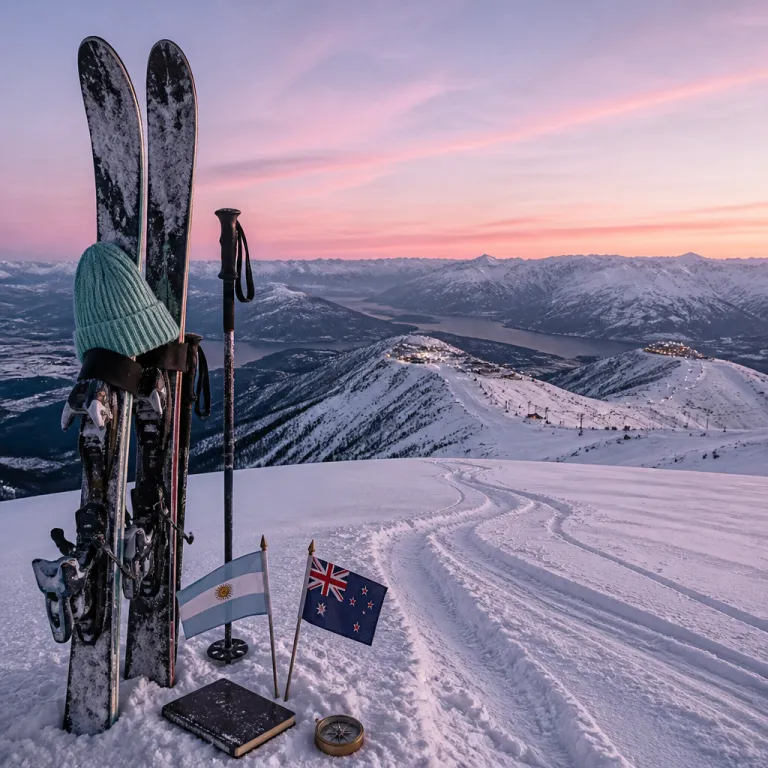
A year round winter: how southern hemisphere ski luxury travel works for solo skiers
Southern hemisphere ski luxury travel lets a solo skier stitch winter into one long, elegant arc. When you plan a ski trip that runs from the far south of Argentina through New Zealand and back into the Andes of Chile, you turn the traditional ski season on its head and follow the snow instead of the calendar. This circuit only works when you understand which ski resort offers the best snow, the right terrain, and the level of service that justifies flying halfway across South America or the Pacific.
The southern hemisphere ski season typically runs from June to October, with each ski resort peaking at a slightly different best time. In Ushuaia, Cerro Castor benefits from its latitude in the deep south, which keeps the snow cold and dry while many other ski resorts are still waiting for coverage. In Queenstown and the Chilean Andes, the ski season is shorter but often more intense, so timing your skiing around local storm cycles and school holidays matters as much as choosing the right luxury property.
For a solo traveler, southern hemisphere ski luxury travel is not just about chasing snow; it is about choosing resorts south of the equator where the après scene, the social programming, and the guided skiing infrastructure make it easy to plug in. You want ski resorts where skiers can join mixed ability groups, where an American ski traveler can meet South American and European guests over a glass of Malbec or Central Otago Pinot Noir. The best ski circuit balances serious skiing terrain with cities like Santiago and Queenstown that offer culture, food, and nightlife between powder days.
Cerro Castor and Ushuaia: the southernmost anchor of your circuit
Cerro Castor, just outside the city of Ushuaia in the far south of Argentina, is the logical starting point for a southern hemisphere ski luxury travel itinerary. The ski resort sits on the slopes of Krund Hill, with roughly 600–650 hectares of skiable terrain and 30+ marked trails served by a modern lift system designed to keep queues manageable even in peak season. For a solo skier, that capacity means more skiing and less standing around, especially when you are trying to maximise a short stay before flying on to the next resort.
The best time to ski Cerro Castor usually runs from June to October, when the snow stays cold and the resort’s grooming team keeps the pistes consistent for both intermediate and advanced skiers. Local experts are clear about the timing: “What is the best time to ski in Cerro Castor? June to October offers optimal conditions.” That long ski season makes Cerro Castor a cornerstone for skiing Argentina when you want to start your South American ski circuit early, before places like Cerro Catedral or Las Leñas are fully up to speed.
Luxury accommodation around Ushuaia is more scattered than in a classic European ski resort, but it is improving every season, with new high end lodges and design forward properties overlooking the Beagle Channel rather than sitting directly on the snow. This is where a curated booking platform focused on Argentina ski properties becomes invaluable, because it filters the growing list of options into a handful of resorts south of Ushuaia that genuinely match the expectations of a premium ski Argentina traveler. When you compare this to a North American reference point such as the refined experience at Heavenly in Lake Tahoe, as analysed in the guide to elevated luxury ski experiences for discerning travelers, you see how far Cerro Castor has come and where it still needs to invest.
Queenstown and the New Zealand interlude: where the town is part of the terrain
From Ushuaia, most solo skiers route north through a major South America hub and then across the Pacific to Queenstown, turning southern hemisphere ski luxury travel into a genuine round the world loop. Typical routings include Ushuaia–Buenos Aires–Auckland–Queenstown or Ushuaia–Buenos Aires–Sydney–Queenstown, with total travel times of 24 to 30 hours depending on connections. International flights connect Argentina and New Zealand efficiently, but you should allow at least a day on either side of the long haul to adjust, reset your ski equipment, and let your legs recover. Queenstown rewards that effort with a compact city that feels built for skiers, with The Remarkables and Coronet Peak close enough that you can be on snow within an hour of leaving your lodge.
The Queenstown ski season typically stretches for around four months, which aligns neatly with the June to October window you have already used in Cerro Castor, but the rhythm is different. Here, the terrain is a mix of wide groomers, playful off piste bowls, and park lines that attract skiers from across South America and Europe who want to keep their skiing sharp between northern winters. Luxury lodges and new hotel openings cluster around the lakefront and on the hills above the city, giving solo travelers a choice between discreet retreats and more social bases that make it easy to meet other skiers over long dinners.
For an American ski traveler used to Colorado or California, Queenstown feels like a hybrid of a mountain town and a small resort city, with serious restaurants, wine bars, and late night venues that can turn a powder day into a long evening. The après scene is not as concentrated as in some European ski resorts, but it is sophisticated, and it rewards those who choose accommodation within walking distance of the centre rather than chasing ski in access at all costs. If you want a sense of how refined mountain towns can feel when they lean into style, the guide to elegant ways to enjoy Boulder ski resorts in style offers a useful benchmark for what Queenstown already does well and where it can still evolve.
Chile’s high Andes: Valle Nevado, Portillo, and Nevados de Chillán
Once you have skied New Zealand, the logical next step in a southern hemisphere ski luxury travel circuit is to swing back into South America and aim for Chile’s Andes. Santiago is the main gateway city, and from there you can reach Valle Nevado, Portillo, and Nevados de Chillán, three ski resorts that define the Chilean high mountain experience. Each ski resort has a distinct personality, and a solo skier should choose based on how much they value terrain variety, snow reliability, and social atmosphere.
Valle Nevado sits above Santiago in a high altitude bowl that often holds some of the best snow in the region, especially in the heart of the ski season. The resort is part of a larger interconnected area with La Parva and El Colorado, giving skiers access to extensive terrain that ranges from groomed pistes to steeper off piste faces that reward guided exploration. For luxury focused travelers, the on mountain properties in Valle Nevado offer the most polished experience in Chile, with ski in access, structured ski school programmes, and a social scene that makes it easy for solo guests to join group tables and guided skiing Argentina style outings.
Portillo, by contrast, is more of a self contained world than a classic South American ski city, with its iconic yellow hotel perched above the Inca Lake and a single compact ski resort infrastructure. The terrain is steep, the snow can be excellent when the storms line up, and the atmosphere is intensely social, which suits solo skiers who want to be drawn into conversations rather than hide in a suite. Further south, Nevados de Chillán offers a different flavour of America ski travel, with tree skiing, natural hot springs, and a more relaxed pace that works well as a final stop before flying home, especially if you have been pushing hard in the higher Andes.
Argentina’s classic Andes: Bariloche, Las Leñas, and Cerro Bayo
No serious southern hemisphere ski luxury travel circuit is complete without time on the Argentina ski classics of Bariloche, Las Leñas, and the quieter but increasingly interesting Cerro Bayo. Bariloche’s Cerro Catedral is one of the largest ski resorts in South America, with a mix of open bowls, tree runs, and long pistes that drop toward the Nahuel Huapi lake, giving skiers a sense of scale that rivals many American ski destinations. The city of Bariloche itself adds another layer, with chocolate shops, craft breweries, and a growing set of high end lodges that finally match the quality of the terrain.
Las Leñas, set deeper in the Andes, has long been a cult destination for expert skiers who care more about steep terrain and big mountain lines than about spa menus. When the snow lines up, it can deliver some of the best ski experiences in South America, but its infrastructure and luxury accommodation options have not always kept pace with its reputation. A curated booking platform that specialises in premium ski resorts south of the equator can help you identify which properties and weeks in Las Leñas currently offer a level of comfort and service that justifies the journey for a solo traveler.
Cerro Bayo, near Villa La Angostura, offers a more intimate alternative to the scale of Cerro Catedral, with views over the lake and a slower, more refined rhythm that suits skiers who want to combine skiing Argentina with long lunches and quiet evenings. Here, the focus is less on extreme terrain and more on the overall ski trip experience, from the quality of the snow to the warmth of the service in small, design led lodges. For many solo skiers, this balance between skiing and atmosphere can be the best time of the entire circuit, especially after the intensity of places like Portillo or the high altitude bowls above Santiago.
Designing a 4 to 6 week solo circuit that earns the airfare
To make southern hemisphere ski luxury travel work as a solo skier, you need a clear structure for your 4 to 6 week itinerary. One effective pattern is to start in the deep south with a week at Cerro Castor, move north to Bariloche for another week split between Cerro Catedral and Cerro Bayo, then cross to Queenstown for ten days before finishing with ten days divided between Valle Nevado and either Portillo or Nevados de Chillán. This sequence follows the snow, balances different styles of ski resort, and gives you time in both remote mountain areas and vibrant cities.
Visa requirements for this circuit are straightforward for most American ski travelers, but you should always check the latest entry rules for Argentina, Chile, and New Zealand before booking flights. Air travel between destinations is the backbone of the journey, with ground transportation used mainly for the final legs from city airports to ski resorts, so factor in transfer times and potential weather delays in the Andes. Because you are traveling solo, it is worth paying for flexible tickets and choosing airlines with multiple daily frequencies on key routes, which reduces the risk that a storm in the south will derail your entire ski season plan.
Accommodation strategy matters as much as flight logistics, especially when you are booking premium properties in popular ski resorts south of the equator. Look for lodges and hotels that either waive single supplements or offer smaller, well designed rooms that do not feel like an afterthought for solo skiers, and pay attention to social programming such as hosted dinners, guided group skiing, or wine tastings. For inspiration on how nightlife and bar culture can shape repeat bookings, the analysis of the bars and late night programmes that make guests rebook a ski hotel is directly relevant to choosing where to stay in South American and New Zealand resorts.
Solo specific strategies: safety, social life, and booking smart
Traveling alone on a southern hemisphere ski luxury travel circuit is liberating, but it demands a sharper approach to safety and planning. You will be moving between multiple ski resorts, crossing borders, and skiing varied terrain from the tree runs of Nevados de Chillán to the open bowls above Valle Nevado and the steeper lines in Las Leñas. That variety is part of the appeal, yet it also means you should budget for local ski instructors and guided groups in each ski resort, especially on your first day on new snow.
Both Cerro Castor and Queenstown’s ski areas offer ski schools and guiding options that cater to different levels, and the same is true in the major Chilean Andes resorts. In practice, that means you can arrive in Ushuaia on a Sunday, take a two hour group clinic on Monday morning, and spend the afternoon skiing with people you have just met, then repeat the pattern in Queenstown or Valle Nevado. For a solo skier, joining a group lesson or guided off piste session is not just about technique, it is also one of the easiest ways to meet other skiers and turn a solo ski trip into a more social experience.
On the booking side, using online platforms that specialise in luxury and premium ski resorts south of the equator gives you leverage that you do not have when emailing properties one by one. These platforms can flag which Argentina ski lodges or Chilean resorts are more flexible on single supplements, which dates in the ski season are less crowded, and where the best ski packages for solo travelers hide. Combine that intelligence with your own priorities, whether that is maximising snow quality, exploring different South American cultures, or simply extending your personal ski season, and you end up with a circuit that feels curated rather than improvised.
Key figures for southern hemisphere ski luxury travel
- Cerro Castor offers roughly 600–650 hectares of skiable terrain and more than 30 marked trails, giving solo skiers a substantial area to explore without repeating runs every hour (based on publicly available resort information and regional ski guides).
- The lift system at Cerro Castor is designed to move several thousand people per hour, which helps keep queues short even during the busiest weeks of the June to October ski season (according to resort technical data and independent ski reports).
- Queenstown’s ski season typically lasts about four months, aligning with the broader southern hemisphere winter window and allowing travelers to combine it with Argentina and Chile in a single extended ski trip (as outlined by Queenstown regional tourism sources).
- The main southern hemisphere ski window from June to October effectively doubles the annual ski season for northern hemisphere skiers who are willing to travel, turning a typical four month winter into an eight month opportunity to stay on snow.
- Air travel remains the primary connector between these resorts south of the equator, with most solo skiers taking at least four long haul or regional flights to complete a full circuit linking Ushuaia, Bariloche, Queenstown, Santiago, and the high Andes ski resorts.
FAQ about a solo skier’s southern hemisphere circuit
What is the best time to plan a full southern hemisphere ski circuit?
The most reliable window for a multi country circuit runs from late June through early September, when Cerro Castor, Queenstown, Valle Nevado, and most major Argentina ski resorts are all in operation. If you want to include late season skiing in Ushuaia or Nevados de Chillán, you can extend into October, but you should expect more variable snow at lower elevations. Aligning your dates with local school holidays in Argentina, Chile, and New Zealand helps you avoid the most crowded weeks in each ski resort.
How do I travel between Cerro Castor and Queenstown efficiently?
The most practical route is to fly from Ushuaia to Buenos Aires, connect to a long haul flight to either Auckland or directly to Queenstown if available, and then take a short domestic leg if needed. In broad terms, international flights connect Argentina and New Zealand, with at least one long overnight sector in the middle. Building at least one buffer day into your itinerary between these long flights and your first day of skiing reduces the risk of losing prepaid ski days to delays or jet lag.
Is southern hemisphere skiing suitable for intermediate solo skiers, or only experts?
Intermediate skiers can absolutely build a rewarding southern hemisphere ski luxury travel circuit, as long as they choose resorts with strong piste networks and good ski schools. Places like Cerro Castor, Cerro Catedral, Queenstown’s Coronet Peak, and Valle Nevado all offer extensive groomed terrain and structured instruction, which makes them ideal for improving technique while enjoying high quality snow. More demanding areas such as Las Leñas or some steeper Portillo lines are better tackled with a guide once you feel confident on red and black runs.
How far in advance should I book luxury accommodation on this circuit?
For peak dates in July and August, you should aim to secure premium rooms and suites at least six to nine months ahead, especially in smaller properties around Ushuaia, Bariloche, and Portillo. Queenstown and Santiago have more overall capacity, but the best located lodges and high end hotels still sell out early for prime ski season weekends. Solo travelers should also ask directly about single supplement policies and any social programming, as these details can significantly affect both cost and experience.
Do I need to bring my own ski equipment for a multi country southern hemisphere trip?
Bringing your own skis and boots ensures consistency across very different snow conditions, which many experienced skiers prefer, but it adds complexity to air travel and transfers. All major ski resorts mentioned here, including Cerro Castor, Queenstown’s areas, Valle Nevado, and Bariloche’s Cerro Catedral, offer high quality rental equipment that is more than adequate for most travelers. A balanced approach is to travel with your own boots for fit and comfort, then rent skis locally to match the terrain and snow you find in each destination.