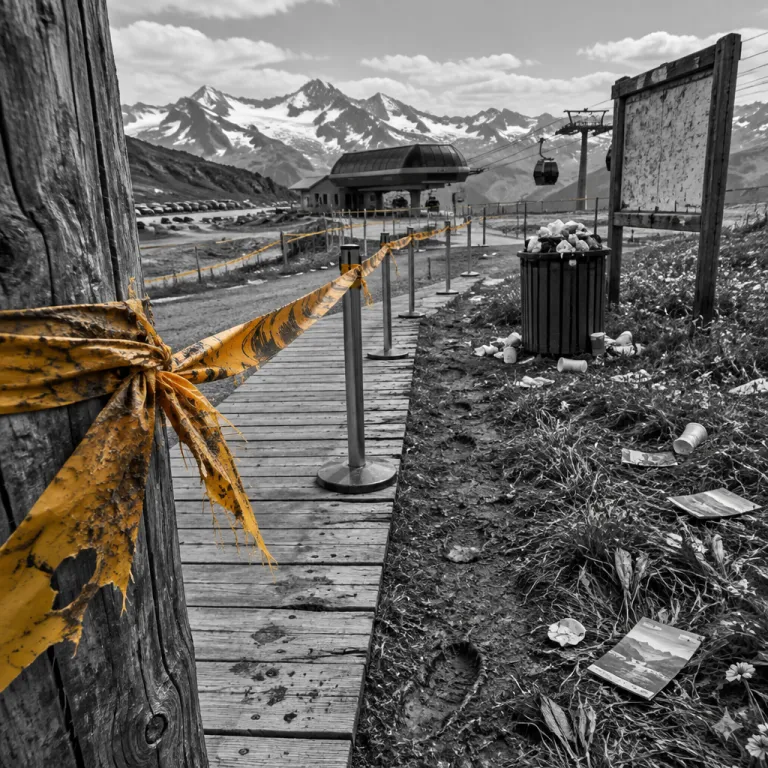
World Tourism Day and the quiet luxury crisis in the Alps
World Tourism Day was meant to celebrate tourism and travel as a force for good. In the high Alps, it now feels like the one moment when overtourism, Alps, sustainable luxury travel should be examined with the same precision you expect from a black piste. Luxury ski destinations are facing a reckoning where the guest experience, the expectations of travelers, and the patience of residents are pulling in different directions.
The concentration problem is simple to describe yet complex to solve for any destination. A handful of popular destinations such as Courchevel 1850, Zermatt, and St. Moritz absorb flag after flag, while smaller villages watch tourists, visitors, and cruise ships style day trippers skim past without stopping, creating a pattern that looks less like sustainable tourism and more like mass tourism in designer ski gear. For local communities, the influx of tourists brings short term economic benefits but also long term negative impacts on housing, water use, and the availability of local labour for anything beyond the hotel and restaurant trade.
Overtourism at the luxury end rarely looks like crowded lift lines or noisy tourists in rental boots. It looks like residents quietly pushed out of the village core, local people priced away from their own slopes, and a monoculture of high end brands replacing everyday services that once made these destinations liveable year round. This is where responsible travel and mindful travel stop being slogans and become hard choices about where you book, how you structure your travel planning, and whether your own travel experiences help to spread or concentrate the impacts.
What overtourism looks like when every brand builds at once
In the Alps, overtourism is not just about how many tourists arrive but about where they sleep, work, and spend. When every new luxury hotel targets the same few kilometres of piste, overtourism, Alps, sustainable luxury travel becomes a story of density rather than volume, and the issue of overtourism shifts from lift queues to the fabric of the village itself. You see it in the way guests step from heated garages to private gondolas while seasonal workers commute from valleys 30 kilometres away.
World Tourism Day should force a harder look at how this pattern plays out in specific destinations. In Courchevel’s Jardin Alpin, for example, the confirmation of another ultra luxury flag, analysed in depth in this report on ultra luxury density, shows how a single slope side neighbourhood can become a case study in long term impacts on land, water, and local communities. The same logic applies in Italian ski destinations, where our guide to Italy’s best ski resorts for premium experiences highlights resorts that balance high end service with a living village, rather than a seasonal stage set for tourists.
For solo travelers who care about responsible tourism, the question is not whether to enjoy luxury but how to align it with sustainable travel and slow travel principles. Choosing a destination slightly away from the most popular destinations, travelling outside peak holiday weeks, and favouring properties that employ local residents year round can reduce the negative impacts of your stay without diluting the quality of your experience. This is overtourism, Alps, sustainable luxury travel in practice, where responsible travel decisions by individual travelers start to rebalance the relationship between guests, visitors, and the people who call these mountains home.
From green promises to regenerative practice on the mountain
Luxury brands in the Alps now speak fluent sustainability, but the gap between language and practice remains wide. World Tourism Day is a useful moment to ask whether sustainable tourism claims translate into measurable reductions in impact, or whether they simply repackage mass tourism for a wealthier audience. The most credible properties treat sustainability as part of the core guest experience, not as a downloadable brochure or a discreet link to download a CSR report.
Energy and snowmaking are where the numbers matter most for overtourism, Alps, sustainable luxury travel. Our analysis of the carbon cost of snowmaking at luxury resorts shows how short term guarantees of perfect pistes can carry long term impacts on water tables and emissions, especially in lower altitude destinations. When a national park boundary sits just above the last lift, the tension between pristine landscapes and intensive grooming becomes more than a theoretical issue of overtourism ; it becomes a daily operational choice with real impacts on ecosystems and local communities.
Regenerative approaches go further than sustainable travel by actively strengthening local economies and culture. That might mean a hotel that sources food from within 50 kilometres, invests in apprenticeships for young residents, and curates travel experiences that introduce guests to local craftspeople rather than only to brand partners promoted on social media. For mindful travel to mean anything, travelers need to ask how their presence as a tourist contributes to economic benefits that remain in the valley, rather than being extracted in a classic mass tourism model that leaves people and places more fragile once the season ends.
How to book like a responsible luxury skier this season
For a solo explorer planning a high end ski trip, responsible travel starts long before you click book now. Begin your travel planning by mapping where the influx of tourists is already intense, then look one valley over for destinations that offer comparable terrain with fewer short term pressures on housing and water. This is where overtourism, Alps, sustainable luxury travel becomes a personal strategy rather than an abstract debate.
When you evaluate properties, read beyond the sustainability page and ask precise questions. Does the hotel employ a majority of staff from local communities year round, or does it rely on short term contracts that leave residents priced out of housing while offering little long term security ? Are there clear commitments to reduce energy use, manage waste, and limit the negative impacts of transport, or are you simply seeing the language of responsible tourism without the structure to support it ?
On the ground, your choices as a tourist matter as much as the property’s policies. Opt for slow travel where possible, staying longer in one destination rather than stacking multiple popular destinations into a single itinerary that amplifies the issue of overtourism. Use social media thoughtfully, sharing travel experiences that highlight respectful behaviour rather than only the most photogenic spots, and remember that the people behind the views are not props but residents whose daily lives absorb the impacts of every season’s visitors and guests.
FAQ
How can I tell if a ski resort is suffering from overtourism ?
Look beyond busy slopes and focus on signs within the village. If housing for residents is scarce, seasonal workers commute long distances, and everyday services are replaced by only luxury retail, the destination is likely facing overtourism pressures. These are clear indicators that tourism and travel demand are overwhelming local capacity.
What makes a luxury ski stay genuinely sustainable rather than greenwashing ?
Authentic sustainable travel in the Alps shows up in transparent data, not just elegant language. Properties that publish clear targets on energy, water, and waste, employ local communities year round, and integrate regional food and crafts into the guest experience are moving beyond marketing. When these efforts are independently audited, you can trust that sustainable tourism is more than a slogan.
Is it better for the environment to visit one resort for longer ?
Staying longer in a single destination usually reduces the overall impacts of your trip. You cut repeated transfers, minimise the short term strain on multiple villages, and give economic benefits to one community in a more concentrated and predictable way. This slow travel approach aligns well with responsible travel and mindful travel principles.
Do my social media posts really affect overtourism in the Alps ?
Social media shapes where tourists go and how they behave once they arrive. Constant promotion of the same popular destinations can accelerate the influx of tourists into fragile areas, including zones near a national park or sensitive ridgelines. Sharing context, local guidelines, and less exposed areas can help balance the impacts of tourism and travel.
What should I ask a hotel before booking to support responsible tourism ?
Ask about staff housing, local hiring, and long term community partnerships. Clarify how the property manages water and energy, especially snowmaking, and whether it measures and reduces its environmental impact over time. These questions signal that guests value responsible tourism and encourage hotels to prioritise sustainable practices.