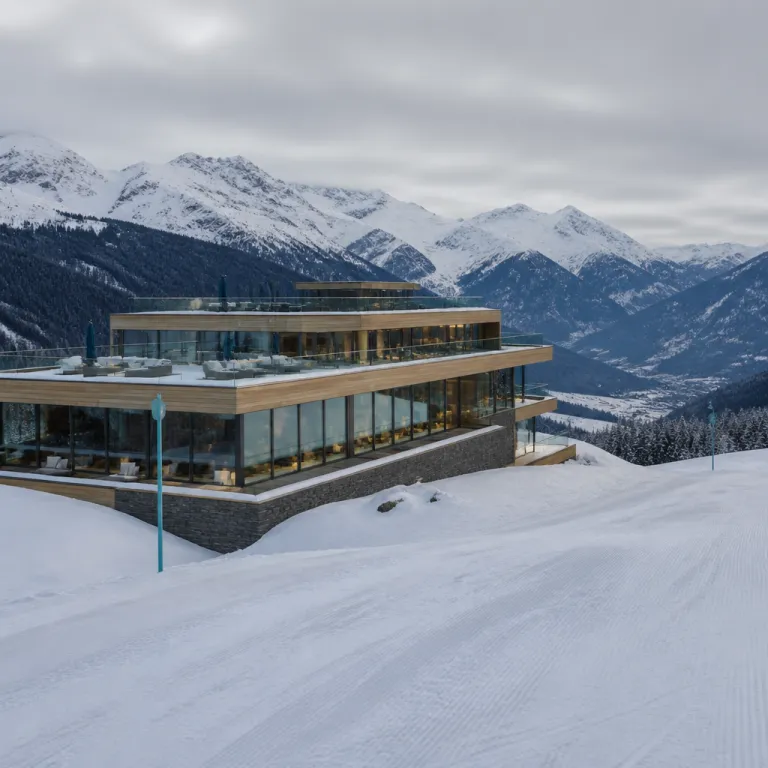
The new language of alpine hotel interior design
Alpine hotel interior design has shifted decisively away from the cartoonish ski chalet cliché. Today’s leading properties use warm minimalism to create a cozy mountain interior that feels calm, edited, and quietly luxurious rather than overloaded with props. This contemporary alpine aesthetic still respects the landscape, but it no longer needs antlers on every wall to prove it.
Design Hotels has summed up the shift clearly: “there is a move to break away from the knotted pine, cow skins and antlers which were a must-have for the ski set.” That line could describe the Six Senses Crans-Montana by AW² (opened 2023), where natural oak, spruce, and stone are handled with the restraint of a contemporary city penthouse. You still read the alpine chalet DNA in the materials and the way each room frames the ski slopes, yet the decor is pared back to a few sculptural pieces, low-glare lighting, and a disciplined colour palette.
Across Switzerland, France, and Austria, industry surveys from regional hotellerie associations suggest that roughly a third of upscale mountain hotels now favour this warmer, minimalist language, and the percentage is climbing as renovations complete. Guests are responding with their wallets: STR reporting for the wider Alps region indicates double-digit RevPAR growth for design-led properties between 2019 and 2023, as design-conscious couples look for interiors that match the quality of the terrain. When you browse a luxury ski resort booking website now, you can almost track the evolution of alpine hotel interiors by how much empty space, natural materials, and controlled light each room is willing to show.
Three emerging schools: warm minimalism, Scandi alpine, Japanese mountain modern
Within this broader movement, three clear strands of alpine hotel interior design have emerged, each offering a different way to experience a contemporary chalet atmosphere. Warm minimalism is the most widespread, using natural wood, soft textiles, and indirect light to make every room feel like a cocoon after a long ski day. Think Patricia Urquiola’s work in Andermatt, where an alpine chalet vocabulary is distilled into simple volumes, generous ceiling windows, and a tactile mix of wood, stone, and felted wool.
Scandi alpine style pushes the palette even lighter, with black and white contrasts, pale wooden floors, and a near monastic approach to decor. Here, the chalet interior becomes a gallery for the landscape, with floor-to-ceiling glazing, slimline furniture, and just enough rustic texture in a single stone wall or a woven throw to keep the space from feeling cold. Japanese-influenced mountain modernism goes further, using shoji-like partitions, low platforms, and perfectly aligned natural materials to create a meditative rhythm between living room, dining room, and bedroom zones.
Designers such as Joseph Dirand, now shaping the next chapter of Park Gstaad and other high-altitude icons, sit at the intersection of these schools, proving how far alpine hotel design can stretch without losing its sense of place. His work, often cited in discussions of new alpine minimalism, shows how a ski chalet can feel both rigorously contemporary and deeply rooted in its valley. For couples choosing a hotel, understanding which of these three design ideas speaks to you will narrow the field faster than any list of amenities.
From chalet kitsch to crafted calm: materials, sourcing, and sustainability
The most interesting alpine hotel interior design developments are not about furniture shapes, but about how materials are chosen, sourced, and combined. Traditional ski chalet decor relied on heavy beams, dark knotty pine, and thick fabrics that made every room feel smaller than it was. The new alpine chic approach keeps the natural materials but edits them ruthlessly, using timber, stone, and linen in larger, calmer planes that let the architecture breathe.
In Le Sarto chalet in Megève, reworked by local designers and completed in 2021, you see this clearly in the way a single brushed-larch wall runs from floor to ceiling, while a continuous limestone floor links the living room and dining room into one generous space. The rustic impulse is still there, but it is channelled into crafted details like hand-forged metalwork or a single slab of wood–stone composite used as a hearth. A recent renovation of Alpine House in Jackson Hole follows the same logic, embedding sustainability into the structure with high-performance glazing, triple-layer insulation, and locally sourced timber rather than just adding recycled decor objects.
For guests, this material intelligence matters because it affects both comfort and conscience during a ski stay. A hotel that uses local natural materials, from alpine stone to regional larch, usually also invests in better insulation, quieter rooms, and more efficient heating systems. When you read about a mountain property’s renovation, such as a detailed breakdown of what changed at Rimrock Banff, look for specifics about wood species, stone quarries, and artisan partners, because those clues tell you whether the interior design is serious or just cosmetic.
Where design innovation matters most: arrival, spa, and the boot room
Design innovation in alpine hotels is most visible not in the suites, but in the shared spaces you move through every day. The arrival lobby sets the tone within seconds, and the best mountain interiors now use height, light, and controlled colour to reset your senses after the drive up. Instead of a cluttered ski chalet reception with heavy furniture and low beams, you step into a calm volume where ceiling windows pull your eye to the ridgeline and a single stone wall anchors the space.
Spas have become the emotional core of many alpine retreats, especially for couples who ski hard in the morning and want a quiet, restorative afternoon. Here, warm minimalism shines, with natural wood slats, soft indirect light, and a restrained colour palette that runs from treatment rooms to pools and relaxation lounges. The rustic element appears in details like a carved wooden bench or a rough stone edge, but the overall style is contemporary, almost urban, which makes the view of snow and ski lifts outside feel even more dramatic.
The boot room is where alpine hotel interior design meets real life, and it is where you can tell whether a property understands skiers. In the best chalet-inspired hotels, the boot room is treated like a living room for gear, with generous benches, heated racks, and durable wood–stone finishes that can take melted snow without looking tired. When you evaluate photos on a booking site or a curated guide to refined alpine stays, pay close attention to these transition spaces, because they reveal how well the hotel has thought about your day from first buckle to last drink.
Guest expectations, room layouts, and how to read photos when booking
There is a real tension in alpine hotel interior design between guests who still want the classic ski lodge feeling and designers pushing toward a cleaner, more architectural language. Many couples arrive expecting a room with visible beams, a fireplace, and maybe a hint of chalet decor, yet they also crave the calm of a contemporary city suite. The smartest properties resolve this by layering textures rather than objects, using natural wood, wool, and stone to create a cozy mood without visual noise.
Room layouts have evolved as well, especially in family-friendly ski chalet style suites where bunk beds and flexible living room zones are essential. Instead of cramming extra beds into a dark corner, designers now carve out dedicated bunk bed niches with their own reading lights, small windows, and playful but restrained decor. In larger suites, the dining room often doubles as a work space, so look for images that show how the table sits in relation to ceiling windows, wall lighting, and circulation, because that will determine whether the space feels generous or cramped.
When you scroll through photos of alpine chalet rooms in places like Val d’Isère or Crans-Montana, train your eye to read beyond the obvious. Notice whether the black and white contrasts feel intentional or accidental, whether the colour palette runs consistently from bedroom to bathroom, and how the floor-to-ceiling junctions are handled. Contemporary alpine hotel interiors reward this level of attention, and the more you look for these cues, the easier it becomes to choose a hotel whose design will feel as considered as the mountain it faces.
FAQ
What defines warm minimalism in alpine hotel interiors ?
Warm minimalism in alpine hotel interior design combines simple forms with natural materials and gentle colour to create a calm, cocooning atmosphere. You will see a lot of natural wood, stone, and linen, but arranged in clean lines rather than heavy rustic shapes. The goal is to feel cozy after skiing without the clutter of traditional chalet decor.
Why are alpine hotels moving away from traditional chalet style ?
Many alpine hotels are moving away from traditional chalet interiors because today’s travelers want spaces that feel both rooted in the mountains and visually modern. Heavy knotty pine, dark beams, and overdecorated walls can make rooms feel small and dated, especially for couples used to contemporary city hotels. By adopting warm minimalism and other new mountain design approaches, properties can attract design-conscious guests while still using local materials and crafts.
Which materials are most common in modern alpine interiors ?
Modern alpine interiors rely on a tight palette of natural materials such as local timber, stone, wool, and linen. Designers often combine smooth natural wood with rougher stone or plaster to balance warmth and texture in each room. Metal details in bronze or black steel add a contemporary edge without overwhelming the rustic roots of the ski chalet tradition.
How can I tell from photos if a ski hotel follows these design trends ?
When you look at booking photos, focus on how the space is composed rather than just the furniture. Signs of current alpine hotel interior design trends include generous empty wall areas, floor-to-ceiling windows, and a consistent colour palette from room to room. If the boot room, spa, and lobby show the same level of material care as the suites, you are likely looking at a property that has fully embraced the new alpine interior design language.
Do these minimalist alpine interiors still feel cozy for a romantic ski trip ?
Yes, the best examples of warm minimalism in alpine hotels feel more intimate, not less. By reducing visual clutter and focusing on light, texture, and proportion, designers create rooms where you can actually relax after a day on the ski slopes. Look for details like layered textiles, soft indirect lighting, and a thoughtful mix of wood and stone, which together deliver a quietly romantic atmosphere.